
The 1975 Trucker Murders
Who Killed Roger Eastwood and Leon Rascoe?

In the late summer of 1975, two men working separate trucking routes along the East Coast began what should have been routine hauls. Both were husbands. Both were fathers. Both made their living on the road. Neither would return home.
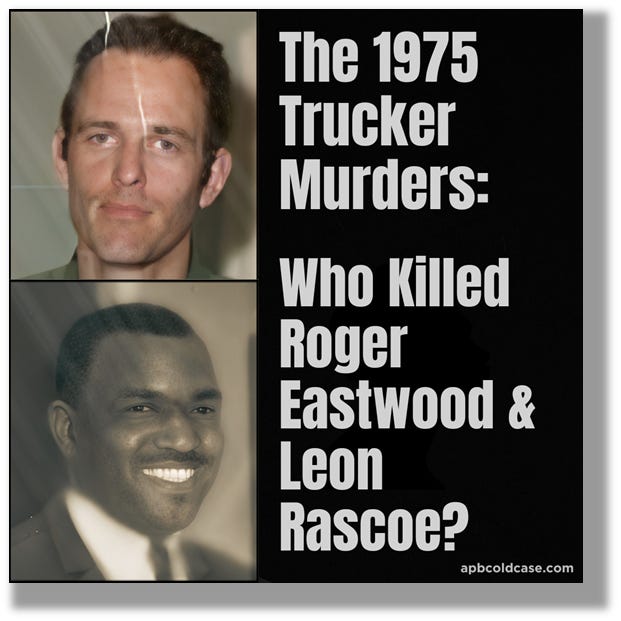
More than fifty years later, the murders of Roger Eastwood and Leon Rascoe remain unsolved—linked not by geography or acquaintance, but by ballistics. The same gun ended both of their lives.
A Routine Run That Never Ended
On a warm evening in August 1975, Nancy Eastwood returned to her home in Federalsburg, Maryland, to find an unanticipated surprise. Her husband Roger—whom she had been married to for nine and a half years—was home early.
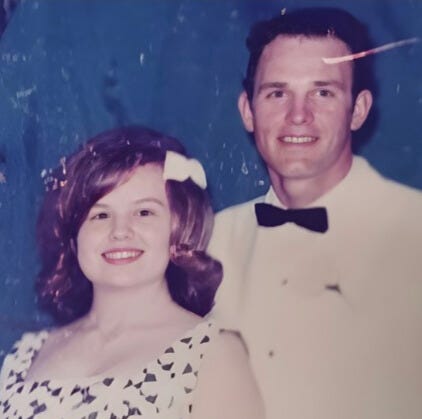
She wasn’t expecting him. Roger hadn’t been home long and planned only to eat quickly, take a shower, and get some sleep. Another run awaited him. Nancy agreed to wake him later that night.
Roger was a truck driver for Poultry Incorporated1. His truck, already loaded, was parked not far from their home. Sometime between 11:30 and 11:40 p.m. on August 28, 1975, Roger left the house and headed north toward New Jersey, hauling a load of processed poultry.
That was the last time she saw him alive.
A Body in the Road
At approximately 5:15 a.m. the next morning, a lone motorist was traveling west along Beverly-Rancocas Road in Westhampton Township, New Jersey, when headlights suddenly illuminated a motionless figure lying in the roadway. The driver swerved, narrowly avoiding the body, and drove straight to a nearby gas station to call police.
When officers arrived, they believed they were dealing with a hit-and-run. The man had no identification, but investigators noted a tattoo on his arm bearing the name “Roger” and a set of keys marked “IH.”
The body was transported to the medical examiner’s office. Meanwhile, New Jersey State Troopers located an abandoned International Harvester tractor-trailer on Interstate 295, just a couple of miles from where the unidentified man had been found. The “IH” key recovered from the scene fit the truck’s ignition. Inside the cab, paperwork identified the driver: Roger Eastwood.
Nancy learned the news when Roger’s brother and his dispatcher arrived at her door.
Her life changed in that moment. It was Labor Day weekend. They had plans. But Roger never made it home.
Not an Accident
The autopsy quickly refuted the initial hit-and-run theory. According to Detective Taylor Bonner of the New Jersey State Police, the medical examiner found no trauma consistent with a vehicle strike. Instead, he found Roger Eastwood had been shot twice in the head with two .32 caliber bullets.
Roger had been murdered.
A Disabled Truck and a Narrow Window
Investigators soon learned why Roger’s truck had been parked on the shoulder of I-295. Two of the right-side tires had blown out. Despite the breakdown, evidence suggested Roger was calm and methodical. He had placed reflector triangles back behind the truck, indicating no immediate distress.
Witnesses later reported seeing Roger sitting in the cab around 3:00 a.m.
But by 4:15 a.m., a motorist saw a man believed to be Roger walking northbound along the shoulder of I-295 toward a vehicle parked about 400 feet ahead of his truck. The car’s trunk appeared to be open, and two men were seen nearby.
Less than an hour later, another witness reported seeing two men standing beside a small green pickup or panel truck on Beverly-Rancocas Road—looking down toward the ground. That location was just two miles from Roger’s disabled rig.
At 5:15 a.m., Roger’s body was discovered in the roadway.
Investigators believe the critical window—when something went terribly wrong—occurred between 4:15 and 5:00 a.m.
Robbery—or Something Else?
Roger’s cargo remained untouched. Company checks totaling $50.10 were never recovered, nor were three fuel credit cards. His wallet appeared to be missing.
Robbery was considered, but it didn’t fully explain the level of violence.
Nancy Eastwood struggled with the idea that her husband would have willingly entered a stranger’s car. She believed Roger fought back. Wherever the confrontation occurred, it wasn’t far from where his body was found.
Who Was Roger Eastwood?
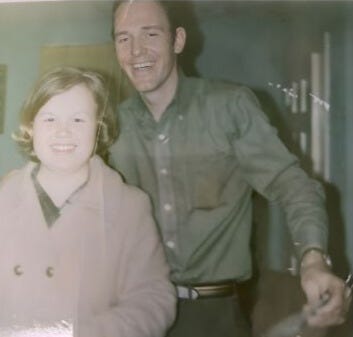
Roger Eastwood was 35 years old. Tall, thin, with dark-hair and an easy smile. He loved fishing and bowling. He was a devoted husband and father to his seven-year-old daughter.
By every account, he was living a full, ordinary life—until someone made the decision to take it all away.
A Timeline That Raises Questions
11:30–11:40 p.m. – Roger leaves his Federalsburg, MD home
Just before 2:00 a.m. – He stops for gas in Delaware
After 2:00 a.m. – Truck breaks down on I-295 North in New Jersey
About 3:00 a.m. – Witnesses see Roger in his disabled truck
4:15 a.m. – Roger seen walking toward a parked vehicle on I-295
About 5:10 a.m. – Two men observed beside a small green truck, on Beverly-Rancocas Road.
5:15 a.m. – Roger’s body found on Beverly-Rancocas Road about 2 miles from his disabled truck.2
The investigation uncovered a disturbing realization.
Another Trucker. Another Shooting.
In the early morning hours of August 9, 1975, 20 days before Roger was murdered, Leon Rascoe was doing what he had done countless times before—driving through the night, alone, on a long stretch of highway.
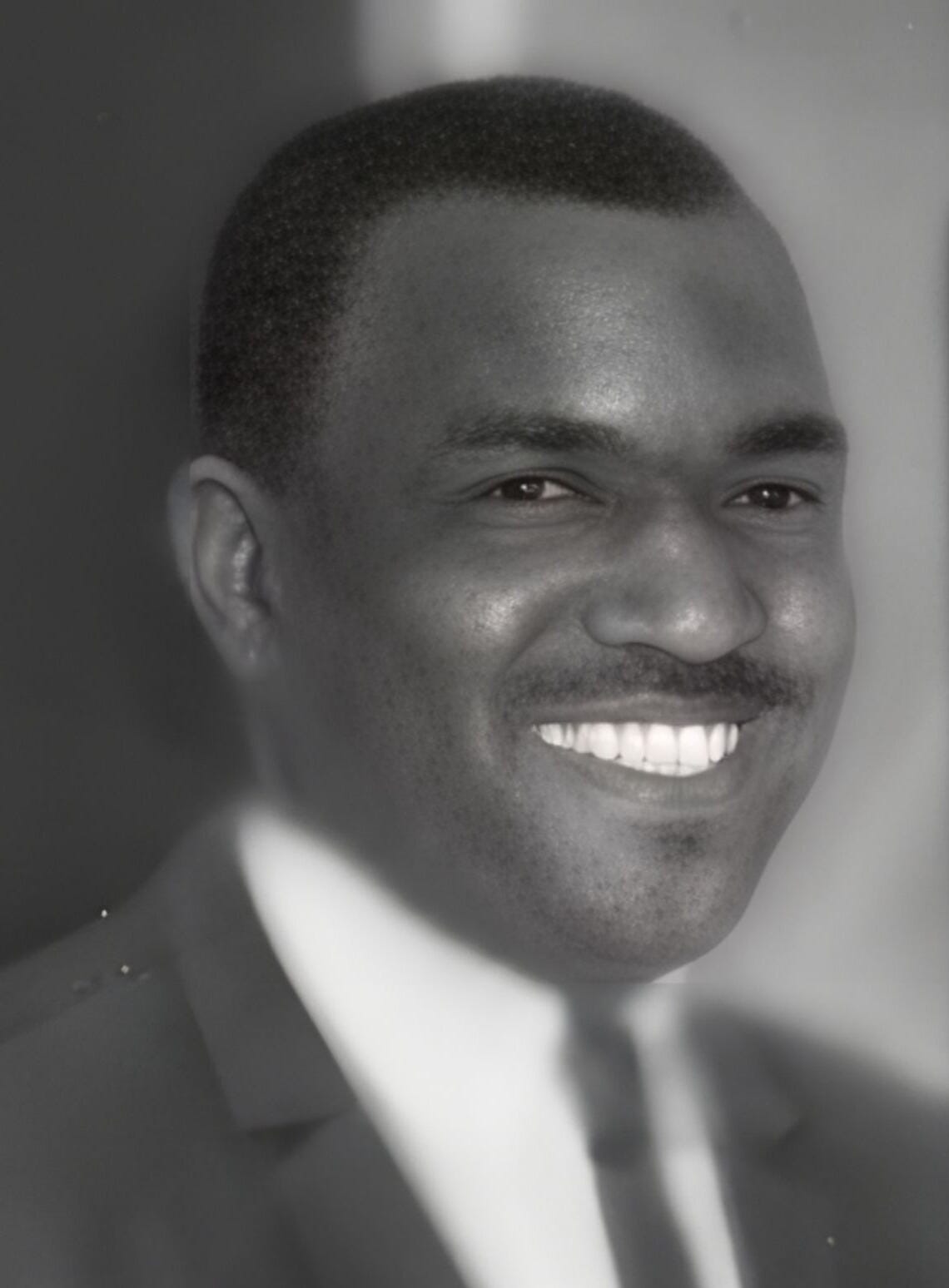
Leon was 47 years old, a truck driver from Harrisburg, Pennsylvania, hauling a load of aluminum for Capitol Products. At 1:41 a.m., his truck entered the Pennsylvania Turnpike, I-76 East, at the New Stanton interchange. The highway was quiet, the kind of pre-dawn stillness familiar to anyone who works overnight routes.
After traveling roughly 73 miles, Leon began to feel the weight of fatigue. He pulled his rig onto a wide shoulder near mile marker 149.7, a place that likely felt safe enough for a brief rest before continuing on.
What happened next would not be discovered until hours later.
At approximately 7:10 a.m., a passing motorist noticed something unusual near Leon’s parked truck. A man was lying on the ground beside the rig, motionless. Police were called, and troopers arrived to find Leon Rascoe unconscious and bleeding from severe head wounds. Though still alive, he was gravely injured.
Leon was rushed to Johnstown Memorial Hospital in critical condition.3, 4
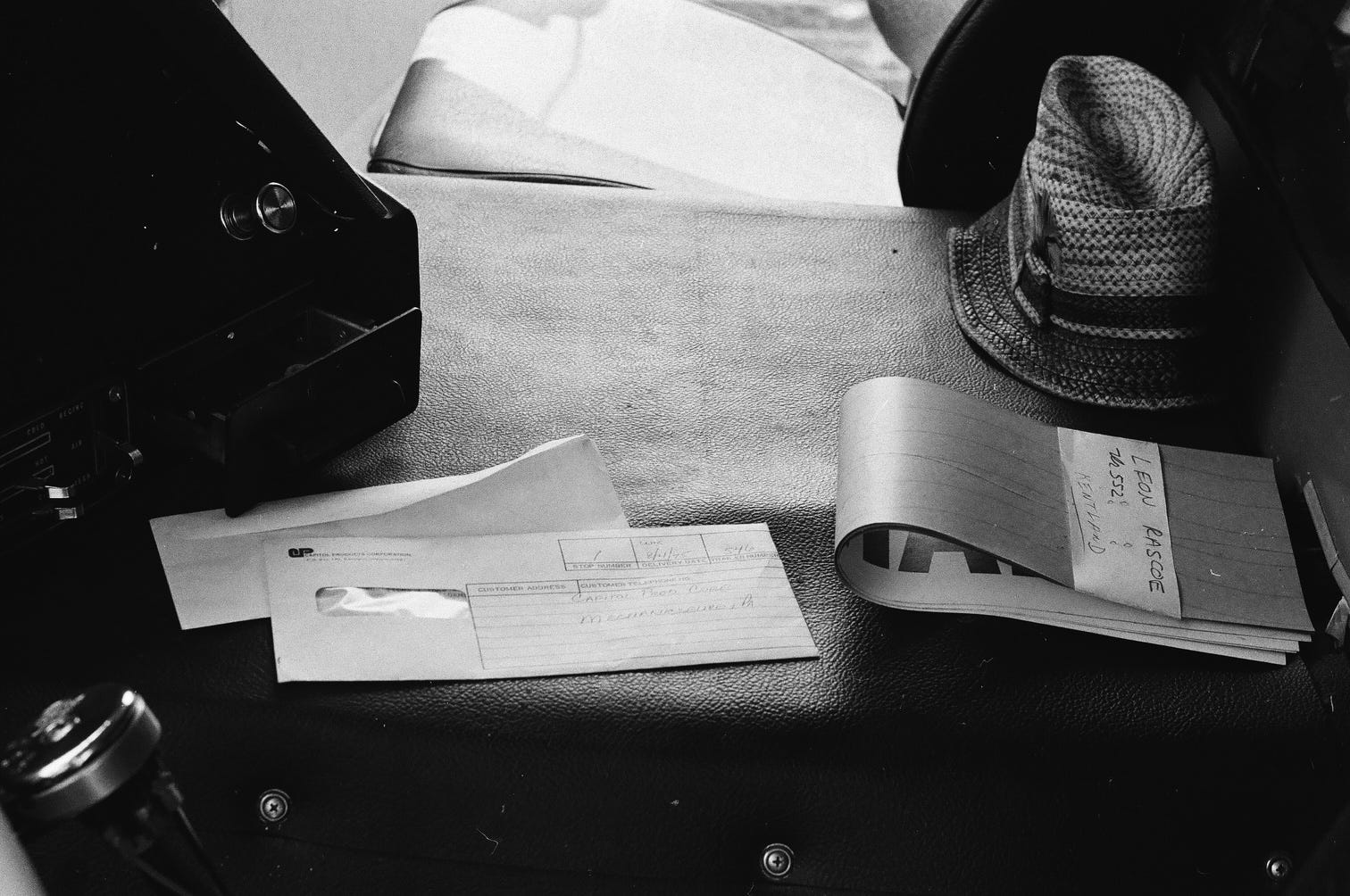
Inside the cab of his truck, investigators found an envelope from his employer and his hat. The scene suggested interruption—an ordinary stop violently altered. Further investigation revealed that Leon had been robbed. Some of his personal belongings were later recovered in the median nearly 50 miles east of where his truck had been parked5, indicating the attacker had continued traveling eastbound after the assault.
How Leon was lured or forced out of his truck remains one of the central unanswered questions. Investigators considered multiple possibilities. One theory suggests Leon was startled awake by someone throwing a fist-sized rock against the cab6—enough to draw him outside. Another theory is that he exited the truck on his own, possibly to use the restroom, unaware that someone was watching and waiting.
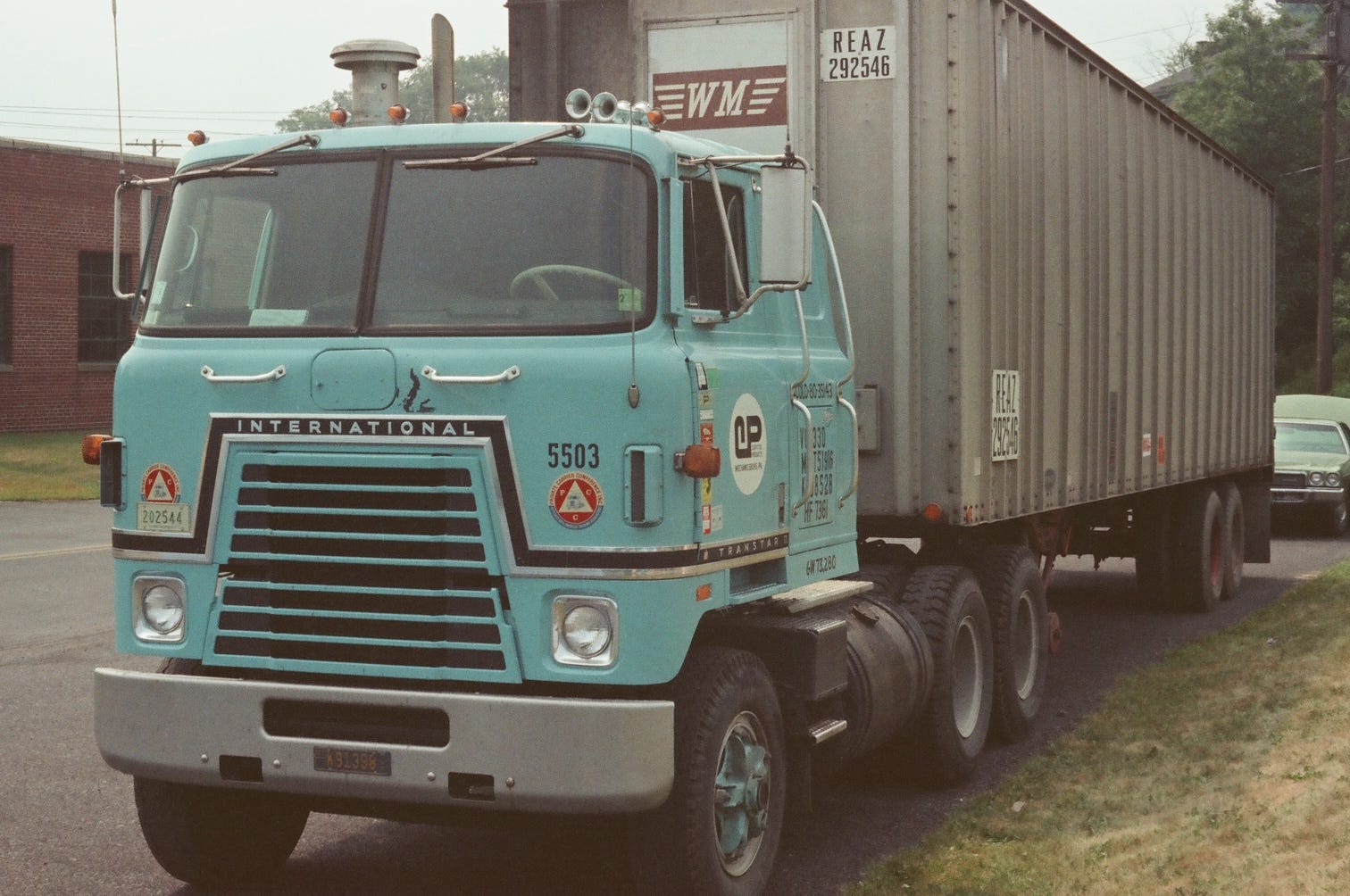
What police believe is that once Leon was outside the cab, he walked around to the right side of the truck. There, at close range, he was shot twice in the head with a .32-caliber pistol.7 The attack was swift and brutal.
Leon Rascoe never regained consciousness. On September 13, 1975—more than a month after the shooting—he died from his injuries. He left behind a wife, two daughters, and five grandchildren.8
At the time, investigators had no suspects.9 But the ballistic evidence recovered from Leon’s head would later take on chilling significance. The bullet fragments showed specific markings that uniquely tied them to a single firearm – the same one that killed Roger Eastwood.
Despite the similarity, the Leon Rascoe case remains particularly difficult. Unlike the Eastwood murder, there were no known eyewitnesses to Leon’s shooting. No reports of suspicious vehicles. No clear timeline of movement after the attack, other than the discarded belongings found miles away.
What remains is a haunting image: a truck pulled safely onto the shoulder, a driver stopping only to rest, and someone taking advantage of that moment of vulnerability.
Investigators continue to ask whether Leon was targeted because he was a truck driver—or whether he was simply the first known victim of a killer who would strike again. More than fifty years later, the murder of Leon Rascoe remains open.
Are There More Victims?
While examining the murders of Roger Eastwood and Leon Rascoe, we widened our search to see whether other cases shared similar characteristics. What we found was another troubling case—one that, at first glance, seemed to fit an unsettling pattern.
In September 1977, two years after Eastwood and Rascoe were shot, 28-year-old truck driver Frank Ziegler was found dead inside his truck along Warrendale-Bayne Road in Allegheny County, Pennsylvania.
Ziegler had last been seen around 11:30 p.m. on September 26, 1977, after delivering a load of milk to a processing plant. According to reporting in The Pittsburgh Press, Frank called his wife, Karen, from his final stop at a dairy in Ambridge to tell her he was on his way home to White Chalk, Pennsylvania. He mentioned that his truck needed two new tires and that he was carrying $400 in cash to purchase them.10
Sometime later, feeling fatigued, Frank pulled his tanker truck over at a familiar spot along Warrendale-Bayne Road in order to rest before continuing his drive home.
The following day11, September 27, Frank Ziegler was found dead in the cab of his truck. Newspaper accounts from the Simpson’s Leader-Times reported that he had been shot twice in the head12. Investigators believed he was shot through the truck window from outside. His wallet was recovered—but the $400 in cash was gone. Frank left behind a wife and three young children, all under the age of six.13
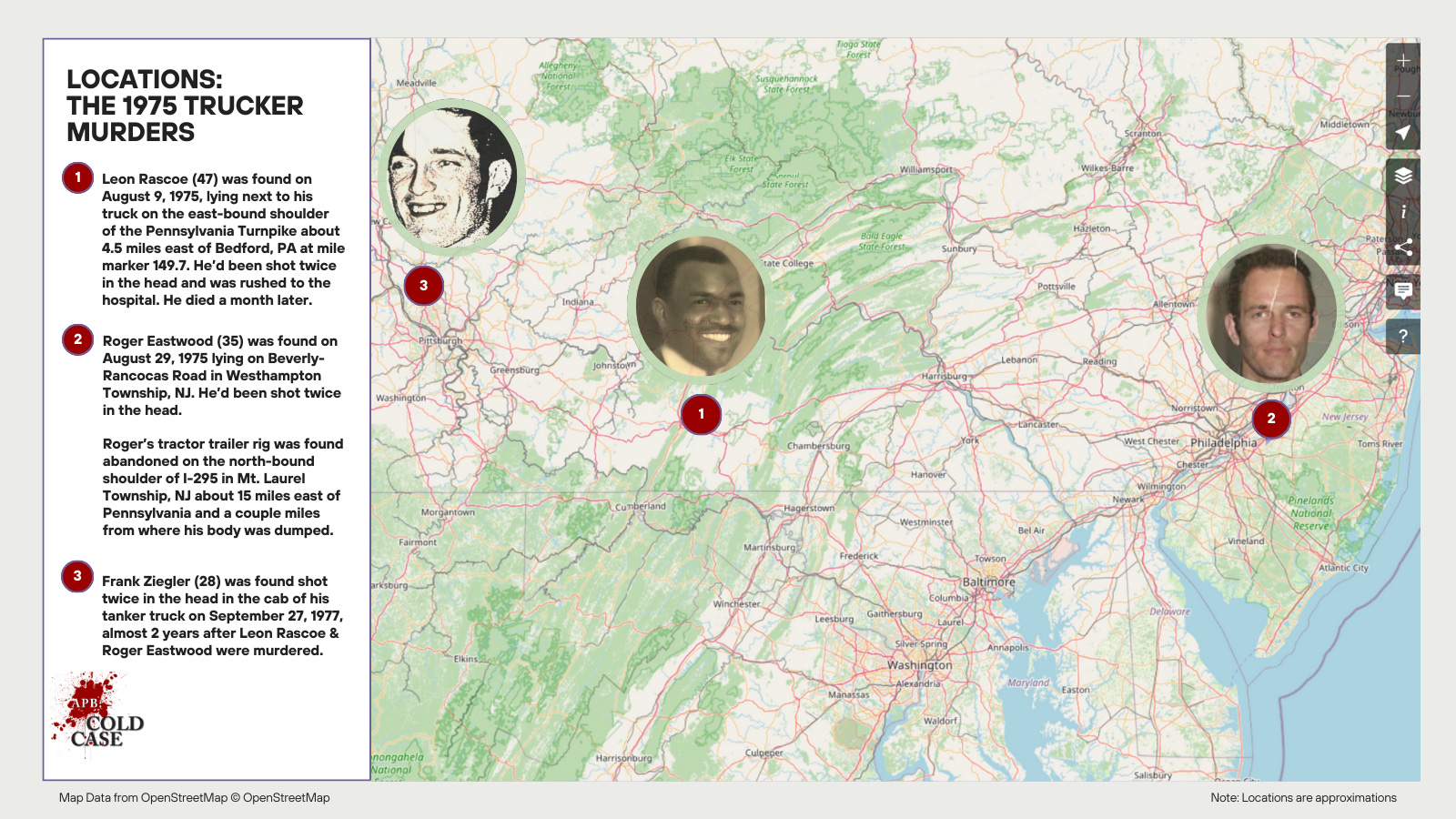
Geographically, Frank Ziegler’s murder fell within a striking range: roughly 360 miles from where Roger Eastwood was killed in New Jersey, and about 120 miles from where Leon Rascoe was shot on the Pennsylvania Turnpike. Chronologically, it occurred two years later. The similarities were hard to ignore—truck drivers, pulled over on the roadside, shot twice in the head. But unlike the Eastwood and Rascoe cases, the Ziegler murder did have a suspect.
Published reports identified Edward Surratt—an unemployed truck driver and former Marine14—as a person of interest. Surratt would have been 35 years old at the time. He was also reportedly suspected in the brutal beating deaths of a couple in Marshall Township, Pennsylvania, just three days after Ziegler was killed.
Surratt went on to commit a series of violent crimes with varying methods before being captured in 1978.15 More recent reporting has indicated that investigators believe Surratt was, in fact, responsible for Ziegler’s murder.16
That raises an obvious and unsettling question: if Surratt killed Ziegler, could he also be responsible for the murders of Leon Rascoe and Roger Eastwood? We put that question directly to Pennsylvania authorities. While investigators are well aware of Surratt and his crimes, they do not believe he is connected to the Eastwood or Rascoe murders. For now, the Ziegler case appears to stand apart—similar in some ways, but not part of the same violent thread.
Still, its existence underscores a haunting reality of the 1970s: for truck drivers working long overnight routes, pulling over to rest could carry deadly consequences—and some killers may never have been identified.
An Open Investigation
Despite decades passing, both cases remain active. Advances in forensic technology continue to offer hope. Investigators urge anyone—no matter how insignificant the detail may seem—to come forward.
For families, answers matter. Nancy Eastwood still wants to know who killed her husband. Not for vengeance, but for the truth.
How You Can Help
Leon Rascoe case (PA): 1-800-4PA-TIPS
Roger Eastwood case (NJ): 1-833-4NJ-COLD or ColdCase@NJSP.gov
The Pennsylvania State Police are offering a $5,000 reward for information in Leon Rascoe’s murder (see PA Tips for details of the reward).
Click buttons below to listen to this episode. And check out our show notes including maps and photos at apbcolcase.com
© 2026 The Spawn Group, LLC; All rights reserved
CITATIONS:
New Jersey State Police
Ibid
The York Dispatch; York, PA; Sept. 16, 1975; p.40
“Trucker, assaulted on turnpike, passes away; Bedford County Press and Everett Press. Everett, PA; Sept. 18,1975; p. 19
New Jersey State Police
Ibid
Ibid
“Trucker Dies”; The York Dispatch; York, PA; Sept. 16, 1975; p.40
Ibid
Milk Hauler Slaying Stumps Authorities; The Pittsburgh Press; Oct 05, 1977; p. 68
Police seek final confessions from serial killer; The Morning Call, Allentown, PA; Sept. 26, 2021; p. A4
RD 3 Man Shot to Death in Parked Milk Tank Truck; Simpson’s Leader-Times, Kittanning, PA; Sept. 29, 1977, p.1
Milk Hauler Slaying Stumps Authorities; The Pittsburgh Press; Oct 05, 1977; p. 68
Surratt Picked Up In Florida”; The Pittsburgh Press; July 5, 1978; p. 1
Police seek final confessions from serial killer; The Morning Call, Allentown, PA; Sept. 26, 2021; pp. A1, A4
Ibid
Photos: Courtesy of the family of Roger Eastwood and The Pennsylvania State Police