
The Closing Time Bandit:
How a Violent Serial Bank Robber Sparked One of Central New York's Largest Multi-Agency Investigations

By Mark A. Spawn, for APB Behind The Badge
Mark Spawn was a Sergeant with the City of Fulton Police Department, New York in 1996 and a member of the Bank Robbery Task Force. He retired in 2008 as Chief of Police for the same department. Today he is the host of the audio podcast series APB: Cold Case and APB: Behind The Badge. Details and links below.
For nearly five years, a masked gunman terrorized banks across Central New York.
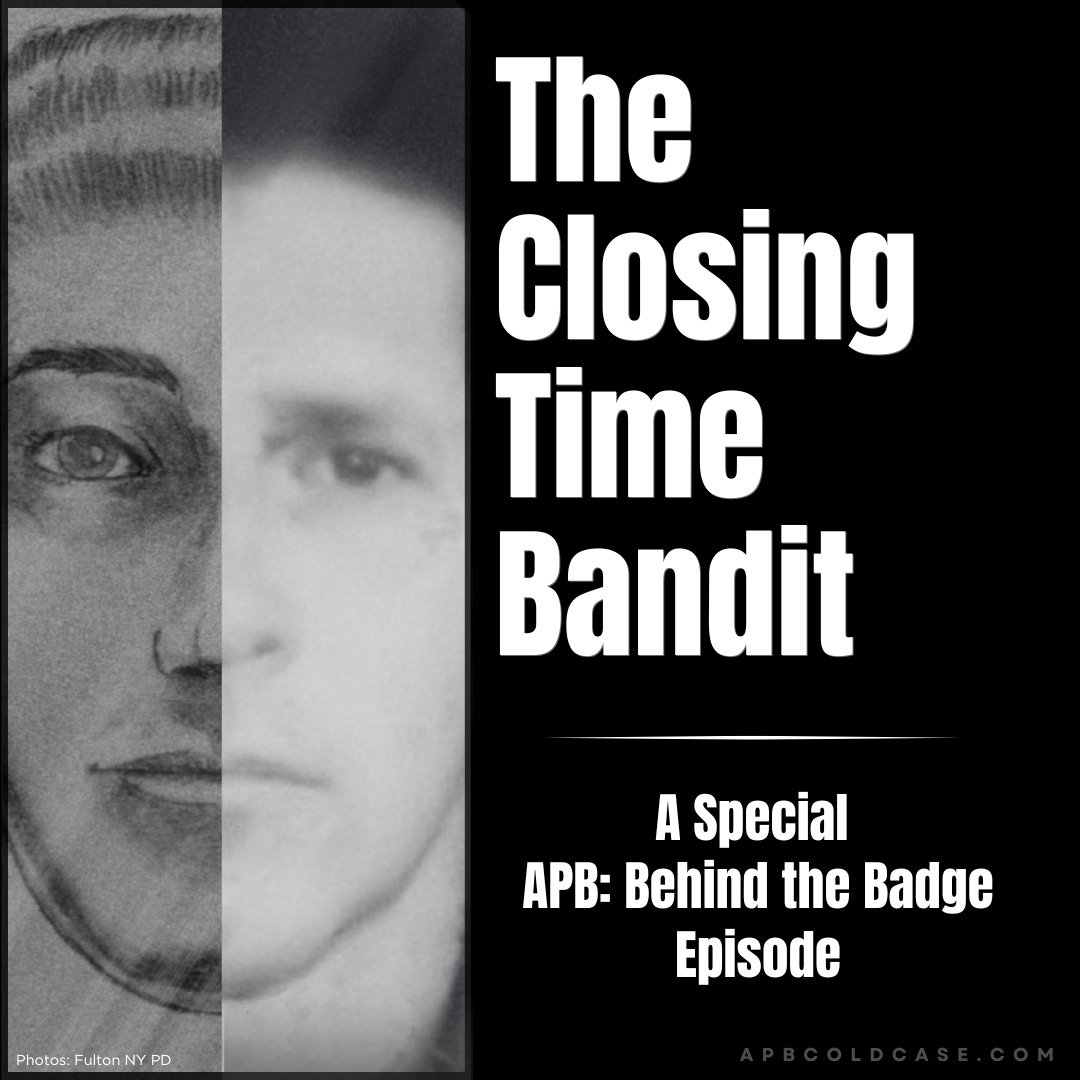
He wasn’t a desperate thief looking for quick cash. He was disciplined, methodical, and increasingly violent. He studied police tactics, staged getaway vehicles, rehearsed every move, and created diversions to pull officers away before striking. Investigators would come to know him as The Closing Time Bandit.
By the summer of 1996, he had become one of Central New York’s most dangerous fugitives—and the target of one of the largest coordinated investigations the region had ever seen.
A Carefully Planned Robbery
On April 17, 1996, a bomb threat diverted patrol officers in Fulton, New York to the west side of the city. Minutes later on the east side, a tall man wearing a Ronald Reagan Halloween mask walked into Fleet Bank on Route 481 armed with a revolver.
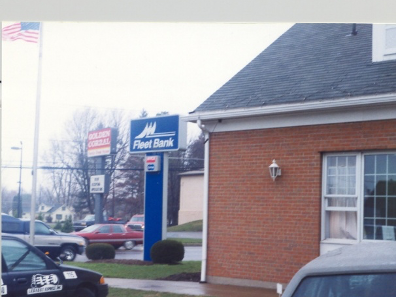
He ordered employees and customers to the floor. When one customer didn’t move fast enough, he was viciously assaulted. The robber demanded cash from tellers while warning against dye packs, security devices that burst with an indelible dye staining the stolen cash and often the thief. The tellers complied and he escaped with more than $18,000. Before leaving, he tossed a military smoke grenade inside the bank, filling the building with thick red smoke. Outside, three people in a car happened by the area in a nearby parking lot as the robber walked out – they focused on the peculiar masked man who was walking toward them. But their staring brought consequences as the thief fired several shots into their car which sent them crashing into a nearby vehicle as they ducked for cover.
I was working in the Criminal Investigations Division at the Fulton Police Department in upstate New York that day. Just before noon, the desk officer let me know that a bank alarm came in from Fleet Bank on Route 481. Ordinarily, I would not have been a first-assigned unit to a bank alarm, but a couple things came into play at the time: First, patrol cars had been dispatched to a bomb threat incident on the city’s west side just minutes before the bank alarm. Secondly, the alarm was mid-day, not at opening or closing when an employee might mistakenly trip the alarm or fail to set/reset the alarm. It also came at a time when I had been involved in a couple other bank robberies which were note-jobs. I grabbed my coat and went to my unmarked car and drove to the bank. When I arrived I expected to see at least one patrol on the scene – but there were none.
Our protocol for bank calls was to monitor the exterior and wait for confirmation from the bank that it was safe to enter – this procedure ensured that we didn’t walk into a holdup where an armed robber might engage in gunfire or take hostages. But there was no confirmation. With my service weapon in hand I discretely walked to a corner of the building and peered inside a window, but I was unable to see through the window because of what I thought were red curtains. I went to another window and again, red curtains. I advanced toward the main entry doors when I saw a woman emerge who I recognized as the bank manager – she was signaling that it was okay to enter. But at the same time she opened the door to meet me, red smoke billowed outward. And as the two of us went into the lobby, red smoke had filled the air making it difficult to see clearly from one end of the lobby to the other. As much as a person would want to escape the choking smoke, the customers and tellers felt it was safer inside. The manager quickly explained that they had been robbed by a masked gunman who detonated the smoke grenade as he left the building. Simultaneously, I was being told from other witnesses that gunshots had been fired outside of the bank.
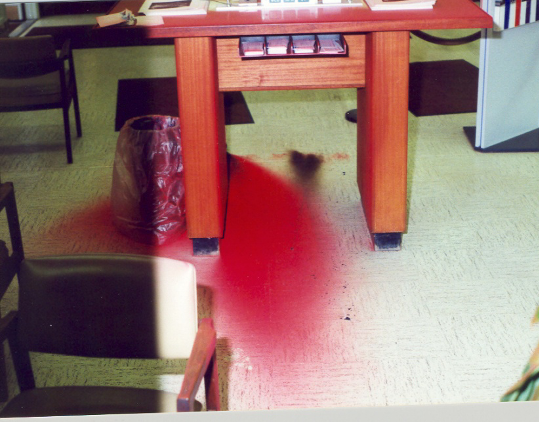
We were dealing with a bank robber who was willing to shoot. Maybe it was a good thing that patrols had been diverted to another call on the opposite side of the city. Was it fortune… or planning? Circumstances would soon cause many of us to have high confidence that the bomb call was, in fact, a diversion.
We weren’t dealing with an ordinary bank robber.
A Familiar Pattern Emerges
Within an hour of the robbery, I met with the FBI. Special Agent John Winslow recognized striking similarities to a string of unsolved bank robberies dating back to 1991. Most occurred late in the afternoon, earning the suspect the nickname, “The Closing Time Bandit.”
Although the Fulton robbery happened before noon, key elements remained consistent:
A tall masked gunman.
Professional planning.
Extreme confidence.
A red Ford Escort used as a getaway vehicle.
That same model of vehicle had appeared in two earlier robberies.
The Mystery of the Red Ford Escort
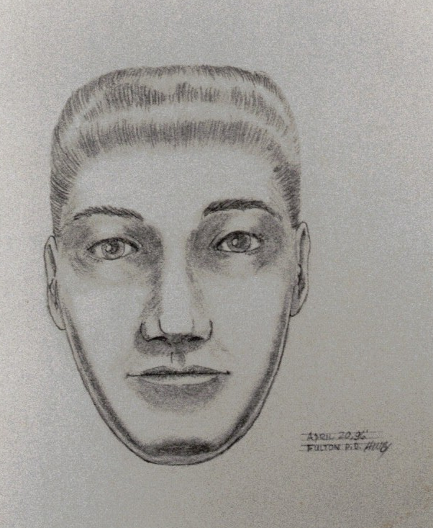
The Fulton getaway car created one of the investigation’s most unusual twists. After the robbery, the Escort was abandoned near a local hospital, where a witness observed the suspect switching into another vehicle. That witness provided a police artist with a sketch, providing us with our first unobstructed look at his face.
But when I checked the vehicle identification number, I discovered something astonishing. The exact same car had already been recovered months earlier after another bank robbery—and had been secured inside a sheriff’s department impound lot. This brazen thief had stolen the stolen getaway car from police custody.
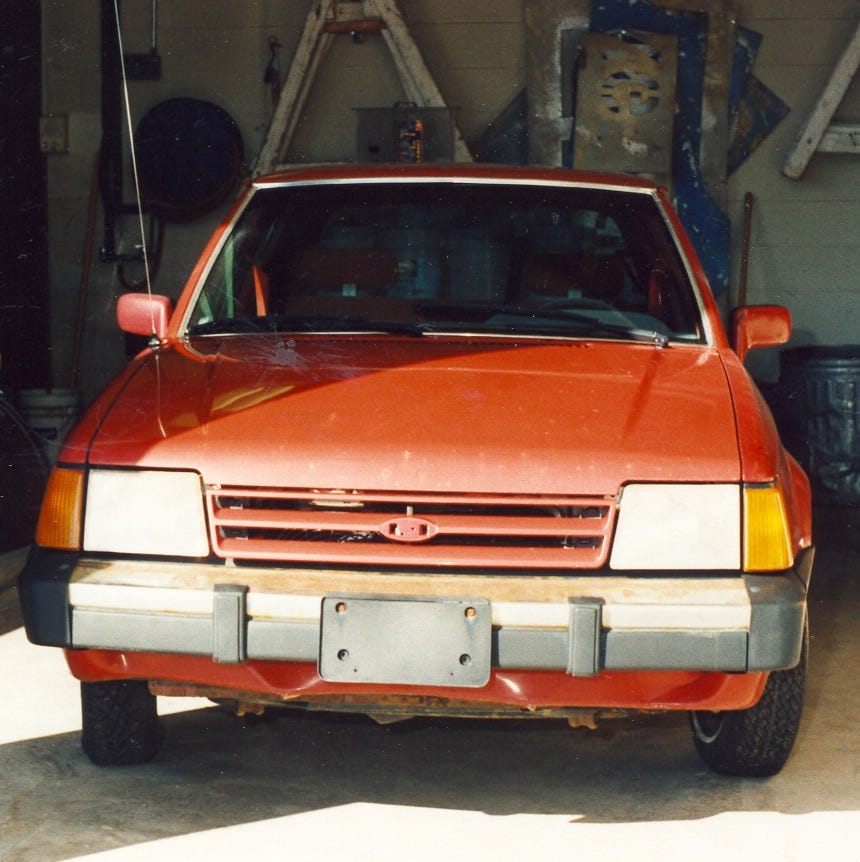
It wasn’t just criminal behavior. It was a message. Why would a careful and scheming robber risk stealing back a getaway car when he could just as easily get a different one? Maybe it wasn’t about the car at all. The robber appeared to be taunting investigators while demonstrating just how meticulously he planned his crimes.
Forming the Bank Robbery Task Force
The escalating violence demanded an equally aggressive law enforcement response. FBI Supervisory Senior Resident Agent Mike Mason of the Syracuse office assembled a multi-agency Bank Robbery Task Force, bringing together investigators from:
FBI
New York State Police
Fulton Police Department
Clay Police Department
Onondaga County Sheriff’s Office
Oswego County Sheriff’s Office
Syracuse Police Department
Operating from a covert storefront under a fictitious business name, investigators worked side-by-side throughout the summer of 1996. The collaboration created an exchange of intelligence, surveillance resources, and investigative expertise.
The Breakthrough
We believed the Fulton bomb threat had been called from a cellular phone. Again, we were highly confident that the call was a diversion to deploy police resources far away from the bank. At a time when cell phones were far less common than today, subpoenaed phone records became a critical investigative tool.
The bomb threat traced back to a phone belonging to a Mary Galvin of Liverpool, New York. Her husband was identified as Ronald Petersen. Now we had a name. Petersen matched witness descriptions almost perfectly. Even more intriguing, one witness remarked that the suspect “walked like a cop.” The witness would soon be proven correct.
Before turning to bank robbery, Petersen had served as a police officer in Virginia and possessed military training—experience that explained much of his tactical sophistication.
Watching Every Move
For the next two and a half months, myself and other members of the Bank Robbery Task Force lived almost entirely on surveillance. “If the banks were open, we were working,” recalled retired Onondaga County Sheriff’s Office Detective Carl Reschke.
The Task Force followed Petersen across Central New York as he:
Checked on stolen getaway vehicles hidden around the region.
Changed stolen license plates while wearing gloves.
Cased banks throughout multiple counties.
Tested police response times using false emergency calls.
Our surveillance teams worked from disguised vans, unmarked cars, hotel rooms, and even aircraft. A couple of close calls nearly exposed the operation.
One day I was on a surveillance at a hotel outside of Syracuse where Petersen had staged a couple of stolen cars. I watched as Mary Galvin drove Petersen to the parking lot where he carefully walked around to 2 different vehicles while carrying a small black case – that was where he kept his license plates. His staged cars were usually backed up to shrubs or trees, something that gave him some privacy while he switched plates. And he was careful, watchful – and wearing gloves when he was touching the plates…. always eyeing the parking lot.”
On another steamy summer day, Sgt. Russ Johnson also of the Fulton Police Department, was conducting surveillance at the same hotel. He was again changing license plates on his stolen cars. But then, Petersen apparently took notice of the surveillance van and approached it – knocking at the door. “I didn’t answer – I didn’t make a move,” remembered Johnson. But Petersen didn’t let that go – he reported the ‘suspicious vehicle’ to hotel security. “Within a few minutes, hotel security is knocking at the door. I still didn’t answer – I just stayed inside and eventually he went away, but he was so cautious about everything,” said Johnson.
Coming Face to Face with the Robber During Surveillance
On August 8, 1996, the surveillance team was tailing Petersen and his wife from Watertown, New York where Petersen had been casing banks. It appeared that he was getting ready to commit another robbery when he called a local store to tell them there were two suspicious men with shotguns outside the store. He appeared careful to not call 911, which would have been traceable. But by this time in the investigation we were listening to his phone calls. Local police responded to the store promptly, and Petersen did not commit a robbery that day.
Petersen and Galvin headed back toward Syracuse on Interstate 81 with the Task Force cars and an airplane monitoring their path. But then, both turned off the highway in a rural area in an apparent attempt to see if they were being followed.
Detective Valerie Brogan was with the Onondaga County Sheriff’s Office at the time and a member of the BRTF. She remembered, “we’re all hopscotching ahead… getting off the road at different times so someone else could take the lead. I went behind a building to hide basically until we could get back into the surveillance mode.” But while Det. Brogan was waiting in the parking lot to determine her next move, two cars pull in – it’s Ronald Petersen and Mary Galvin.
Det. Brogan was pregnant at the time and had her firearm concealed in a fanny pack – she drew her gun and had it sitting in her lap, not knowing what Petersen’s next move would be. She had radioed to other team members her location and situation. In the meantime, other units are en-route to backup Brogan. Russ Johnson remembered racing to Brogan’s location, “…because I’m so concerned that this could turn bad really quickly.” But by the time Johnson arrives, Petersen and Galvin are just pulling out of the lot. Brogan said, “They took a look at me, and they just left.”
There was still concern that perhaps Petersen had made the surveillance. But the next day, Petersen was on the move again – this time toward Rochester, New York.
The Final Confrontation
In the days following the Watertown incident, the Task Force watched Petersen as he appeared to be laying the groundwork for a robbery in the Rochester area.
Special Agent Rob Haley (FBI Syracuse) had alerted his contacts at FBI Rochester where he had previously served as a SWAT member himself.
August 15, 1996 began as another surveillance day as BRTF members watched Petersen and Galvin intently. But when Petersen went to get a van he had stolen from a military recruiting office, it appeared that he was getting ready to commit another bank robbery. Agent Haley again contacted FBI Rochester to have the SWAT Team put on alert.
FBI Special Agent Scott Augenbaum took a position in a hotel room where he could better monitor Petersen and the stolen van. It wasn’t long before Augenbaum made a critical observation – he reached for his radio and called out to the rest of the team: “Guys, he’s putting on a bulletproof vest.” Augenbaum also saw several magazine clips attached to the vest. This was significant – a last step in his process which already included staged getaway cars and his wife nearby who was also believed to be armed and in radio contact.
The FBI SWAT Team was ready to deploy. They soon moved to the parking lot in Henrietta, New York (bordering Rochester) where Petersen sat alone – another team had identified Mary Galvin’s location about one mile away.
Given the dangerousness of Petersen and another then-unknown accomplice evidenced from prior robberies, law enforcement was not going to let him commit another robbery. The decision was made to arrest Petersen and Galvin. The SWAT Team launched into action, descending on the parking lot where Petersen sat behind the wheel.
At the time it appeared that Petersen was preoccupied with a communications device – perhaps the walkie-talkie to Mary or a cellular phone. But when he looked up, the SWAT team had him boxed in.
Agent Haley said, “they put a vehicle in front of him, two vehicles beside him, and the big Bearcat (armored tactical vehicle), blocking him in, and he’s got nowhere to go. But his windows are all up and the engine’s running, and they’re calling him out.”
Agents are ordering Petersen to get out of the van with his hands up. Haley, who spoke with many of his former colleagues on the SWAT Team, said the agents characterized Petersen’s reaction as disbelief: “…it’s like a look on his face, like… ‘how did you guys catch me?’ But also, ‘I’m not giving up today.’”
After what Haley described as a long pregnant pause, the SWAT Team Leader ordered smoke rounds to be fired into the van. But Petersen still refused to come out. Agent Haley said that the agents who could see Petersen behind the wheel described his facial expression as enraged and he attempted to flee.
“He had a column shifter on the steering wheel and pulled it down, put it into neutral, he was gunning the engine,” said Haley. “And then got it into drive, lurched forward, hit the blocking vehicle in the front.” It was then that agents fired on him. Petersen and the van moved forward until it crashed into the corner of a building at the shopping mall. Agents swarm the van and check Petersen for a pulse – there is none. Ronald Petersen died at the scene.
But it wasn’t quite over yet – inside the van agents observed hand grenades on Petersen’s vest. The bomb squad was called in to make the scene safe. Haley said, “My memory was he had 3 live hand grenades and a smoke grenade on his front,” along with a .45 or 9mm handgun, long rifle and shotgun. “Everything was loaded up, ready to go,” he added. Former Special John Winslow said that Petersen’s rifle had been converted to full-automatic.
Arrest of Mary Galvin
Nearby, Task Force members had simultaneously arrested Mary Galvin while she was standing by her car. Said retired police Sgt. Russ Johnson, “She was pumping gas at a Mobil gas station, and she was literally outside of her car.” The Task Force took Galvin into custody without incident, recovering a loaded handgun and extra magazines between the front seat of her car where her 4-year-old daughter was seated. “We were fortunate to have her pumping gas,” added Johnson, “because as she said after, in her interview in Rochester, Petersen told her to just shoot anybody who comes at you.”
Galvin was taken to the local FBI building for questioning while her daughter was cared for by other cops.
Special Agent Scott Augenbaum was at the Rochester FBI office with Galvin when she was brought in for questioning. “I was talking to Mary…and she goes, ‘where’s my husband?’ At the time Augenbaum was unaware of what happened between Petersen and the SWAT team. “She looks at me, and she goes, ‘you don’t understand my husband. He swore he would never be taken alive.’”
Task Force member Carl Reschke was also interviewing Galvin, conferring with Agent Rob Haley as to whether they should let her know her husband had been killed. Reschke said he believed that Galvin would unburden herself if she knew that Petersen was dead. Reschke said, “We kicked it around for a few minutes, and then came to an agreement, we’ve got to tell her.” Reschke and Haley felt they had nothing to lose – if she believed he was still alive chances were she might not cooperate. “And then she just opened it all up,” said Reschke. “And that’s how we learned about the other robberies that he had done that weren’t bank-related” including the ATM robbery and the theft of the Ford Escort from police impound, added Reschke.
Former Detective Valerie Brogan agreed, saying that Galvin appeared relieved upon hearing that Petersen was dead, “It just was apparent that this wasn’t her idea. It just seemed from the get-go that she was just a woman who, I think, she fell in love with him and he had gotten her involved in something that was way over her head. I think she wanted out, but didn’t know how to get out.”
The operation to capture Petersen had finally ended—but investigators soon realized how much more dangerous he had been than anyone imagined.
After the takedown of Petersen, myself and others went to the Petersen home in Liverpool, New York where a search warrant was being executed. After months of watching the home conducting surveillances, as well as watching a camera that we had on the street, this was my first look up-close.
It was a typical suburban neighborhood; The home, like any other on the block – single family, two story; living room, dining room and child’s bedroom on the first floor with a spiral staircase to the second floor and the master bedroom. It provided the perfect cover for Petersen and his cache of weapons and intelligence documents. Petersen, Galvin and their daughter fit in the neighborhood like an ordinary family. But this was no ordinary family.
An Arsenal Hidden in Plain Sight
The search warrant executed at Petersen’s home revealed what investigators described as an intelligence center and armory. Two loaded handguns were found in the master bedroom, but that was just the beginning…
Hidden behind a concealed room were:
Two bricks of C-4 explosive
Dynamite
Live hand grenades
Firearms
Thousands of rounds of ammunition
Police scanners
Radio equipment
Blasting caps
Timers and fuses
Investigators also discovered defensive firing positions built inside the home, allowing Petersen to engage anyone approaching the residence.
Agents Haley and Augenbaum remembered going to the Petersen home and seeing some of Petersen’s preparations. “…the upstairs bedroom, he had built shooting positions with a ladder that he could retract…”, said Haley. “So if you went in the front door or back door, he had great field of fire on you. He set that thing up to defend in place, a final hoorah if we ever went there,” he added. Augenbaum reflected that an attempted arrest at the house could have resulted in a catastrophic gun battle. “Looking at the sniper perch… if we would have tried to make the arrest at the house, oh my God, things would have been different,” said Augenbaum.
Point Break
Another item found in Petersen’s home was the Ronald Reagan mask he had worn in the Fulton Bank Robbery. The movie Point Break was released in 1991, the same year that Ronald Petersen committed his first bank robbery. In the film, Patrick Swayze portrays a bank robber who wears a Ronald Reagan mask; His character is cocky, assertive and in control.
Similar to Petersen’s modus operandi, both use a getaway car and switch to another car to make their escape; both taunt bank employees and assault customers; and to a degree, both seem to view their heists as a game.
It is unknown whether Petersen was influenced by the film or if he even saw it, but the similarities are striking, particularly his increasingly violent behavior which was supported by what law enforcement found at his residence.
More Crimes Revealed
Following Petersen’s death, Mary Galvin became a cooperative witness.
She admitted her involvement in several robberies and helped investigators connect Ronald Petersen and his brother, Douglas Petersen, to additional crimes. Among them was the June 1994 ATM holdup at the Northern Lights Mall in Mattydale (outside of Syracuse) which some police officers had suspected was related to the Closing Time Bandit. But this was no ordinary robbery – it was yet another demonstration of the planning and preparation that went into the heists. And it turned out that Ronald Petersen was part of it, waiting in a van, just outside of the bank and in radio contact with his brother, Douglas Petersen who hid along a tree line wearing a ghillie suit – a camouflage disguise used by snipers and hunters to blend into natural surroundings.
The bank had just received a shipment of cash for the ATM, and two female employees filled the machine. Armed with a handgun, Douglas emerges from the tree line when one employee exits the bank to test the ATM. He then forces her back inside at gunpoint, calling her by her first name, naming her child and the location of her child’s daycare and telling her if she does not cooperate, he will harm her child.
During the robbery, the employees hear the robber talking on a radio to someone using the code name, “Bulldog.” He fills bags with more than $80,000 in cash and then zip-ties the two women, placing bags over the heads.
Speaking about Douglas Petersen, Retired FBI Special Agent John Winslow said, “We didn’t know it at the time, but he was talking to his brother on the radio.” During that robbery, Winslow said that Douglas Petersen fired a round from a handgun where he had restrained the two female employees with bags over their head. “They each thought that the other one was murdered and that they would be next.”
Investigators would learn from witnesses that the man in a ghillie suit was seen getting into the passenger’s side of a cream-colored van about a half mile from the bank.
Galvin also assisted investigators in arranging a meeting that ultimately led to Douglas Petersen’s arrest. She invited him to her home in the winter of that same year. The FBI had installed audio and video devices in Galvin’s residence hoping to hear admissions by Douglas concerning his involvement in the robberies.
It was just after Christmas 1996 when agents anticipated Douglas’ arrival during the mid-afternoon. They met briefly with Mary inside the home to activate the recording equipment, but then Douglas pulled into the driveway with his family earlier than expected. Retired Special Agent John Winslow recalled that as Douglas Petersen was entering Mary’s home from the back door, two agents were leaving by the front door.”
As the conversation ensued between Mary Galvin and Douglas Petersen, members of the Bank Robbery Task Force waited – one team near Galvin’s Liverpool home and another at the Super 8 Motel where Douglas Petersen was staying. Police listened in as Galvin spoke with Douglas. Said Winslow, “Doug wouldn’t say anything. He was writing on a pad and he would show it to Mary.” What was Douglas writing? That answer would come soon.
Douglas Petersen left Galvin’s home and returned to his motel where a team from the BRTF was waiting. When he arrived, he was quickly arrested. And in his back pocket – the notebook where he had been writing notes to Galvin. The note on the front page said, “DON’T MENTION ME AND MONEY.”
Winslow said that Douglas Petersen pled guilty within about a month of his arrest. “Doug loved his older brother, wanted to be like him, but he wasn’t. He didn’t have the heart of a bank robber. But he did two jobs with him,” said Winslow.
Douglas Petersen was sentenced to almost 11 years in prison. Records show that he was released in 2006.
Mary Galvin pleaded guilty to a single count of conspiracy and was sentenced to 18 months in prison plus restitution. Records show that she was released in 1998.
Petersen and Galvin’s daughter was cared for by other family members during Mary’s incarceration. We’re not identifying her, but she went on to earn an excellent education and built a career dedicated to helping others.
APB: Behind The Badge reached out to Mary Galvin for comment, but she politely declined
The Lasting Impact
Between 1991 and 1996, more than $300,000 was stolen during the robberies—well over $600,000 in today’s dollars. But the financial loss tells only part of the story.
Many victims carried the emotional trauma for decades. A teller from Ronald Petersen’s last bank robbery declined to be interviewed for this story, the pain still too raw after three decades.
Retired Town of Clay Police Investigator Christopher Wood said that one of his friends as a teller at a Marine Midland Bank that was robbed by the Closing Time Bandit. Wood said that on a conversation one day she mentioned being robbed and Wood identified that robbery as one of Petersen’s robberies. “And I explained to her that I was part of this Task Force and I asked her if she’d like to know a little bit more (about it). She turned white. She didn’t want to know anything about it. Here it is 25, 30 years later, and it still really bothers her.
For investigators, the case became equally unforgettable. Many members of the Bank Robbery Task Force describe it as the defining investigation of their careers—not simply because of the danger involved, but because of the remarkable collaboration between local, county, state, and federal agencies.
Said Retired Detective Carl Reschke, “I did 25 years with the Sheriff’s Department, and some of the best cases you had was when you’re collaborating with other agencies.” Former FBI Agent Rob Haley echoed those sentiments, saying, “The best cases that I had the pleasure of working on in my FBI career, 25 and a half years, were task force cases …. this one’s right up there at the top of the list.”
A Legacy of Teamwork
The investigation into Ronald Petersen demonstrated what can happen when agencies combine their resources, expertise, and determination toward a common goal. The Closing Time Bandit believed he could outthink law enforcement indefinitely. Instead, he faced a coordinated Task Force whose teamwork ultimately ended one of Central New York’s most dangerous serial bank robbery sprees.
Former Detective Valerie Brogan summarized it best, noting, “We were dealing with someone who had a law enforcement background, a military background, and he was growing very aggressive. It seemed like he was… gaining more and more confidence, that he thought he was smarter than everybody else. He thought he was going to get away with this forever, I really believe that.”
As the members of the Bank Robbery Task Force reflect three decades later, they remember not only the danger they faced, but the friendships, professionalism, and trust forged during one extraordinary investigation.
Explore More
For photographs, Who’s Who, robbery timeline, investigative documents, and additional behind-the-scenes details from this remarkable case, visit the APB: Behind the Badge section of the APB: Cold Case website.
APB: Behind The Badge are special episodes alongside of our primary series, APB: Cold Case which profiles unsolved murders and missing persons cases from across the nation. Details on all productions can be found at www.APBColdCase.com
Click button below to listen to the complete episode to hear firsthand accounts from the retired FBI agents, detectives, and police officers who lived this investigation—from the bomb threat in Fulton to the final confrontation that ended the Closing Time Bandit’s reign of terror.
©2026 The Spawn Group, LLC; All right reserved