
Follow That Car!
The Mystery of Who Killed Carolee Ashby

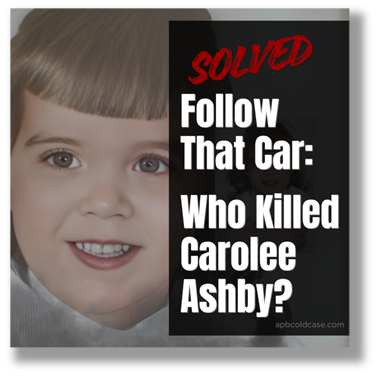
A Birthday Errand Turns Tragic
It was October 31, 1968 in Fulton, NY. Fifteen-year-old Darlene Ashby was celebrating her birthday. After dinner, the family planned to have cake before heading out for some trick-or-treating. But there was one problem: no birthday candles.
Carolee, the youngest of the Ashby children, insisted her big sister have candles on her cake. So, their mother sent Darlene and four-year-old Carolee, along with their cousin Sheryl to a nearby grocery store to pick some up. After buying the candles, Carolee spotted the Carvel ice cream shop next door and convinced her sister to buy her an ice cream cone before they walked home.
As the girls crossed South Second Street (more commonly known today as State Route 481), Sheryl ran ahead but Darlene saw a southbound car approaching and stopped in the middle of the roadway while holding tightly to Carolee’s hand. What she didn’t see was another car coming northbound from behind them. In an instant, the vehicle struck Carolee. The force ripped the little girl from her sister’s grasp and hurled her body more than 100 feet down the road.
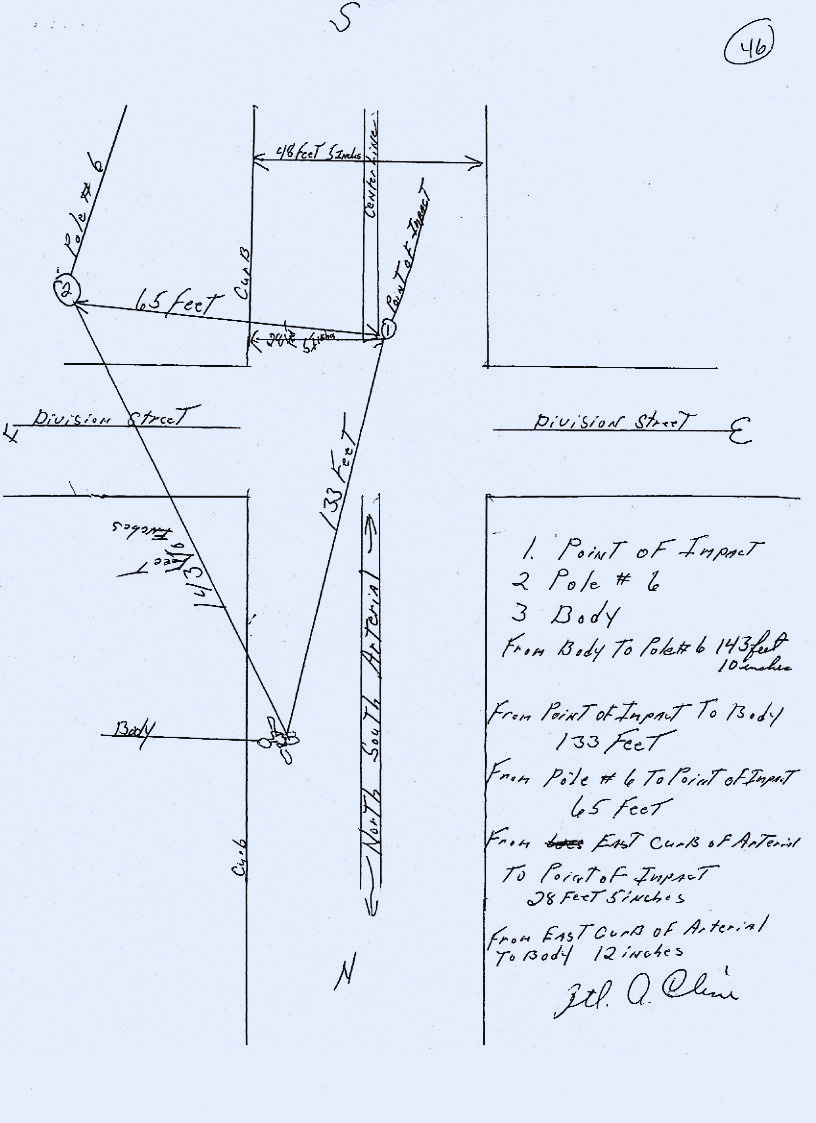
Darlene later recalled screaming and rushing toward her sister, only to be held back by bystanders who warned her not to move the child. The driver never stopped. Carolee was rushed to the hospital, but she died from her injuries.
A Little Girl Everyone Loved
The Ashby family was devastated. Carolee was remembered as imaginative, energetic, and endlessly cheerful — the kind of child who instantly became the center of attention wherever she went.
As the youngest of three children, she was adored not only by her siblings, but by neighbors, friends and extended family members throughout the community. Darlene remembered that little Carolee used to get free doughnuts when she visited the LaFornarina Bakery next door to their home on South First Street.
Darlene shared that she and her brother often competed for Carolee’s affection because they simply wanted to spend time with her. And now, the sudden loss of such a vibrant little girl left an emotional wound that never fully healed.
The Original Investigation
Police launched an investigation immediately. The scene itself was haunting: Carolee’s ice cream cone still lay melting in the roadway as officers interviewed witnesses and searched for clues.
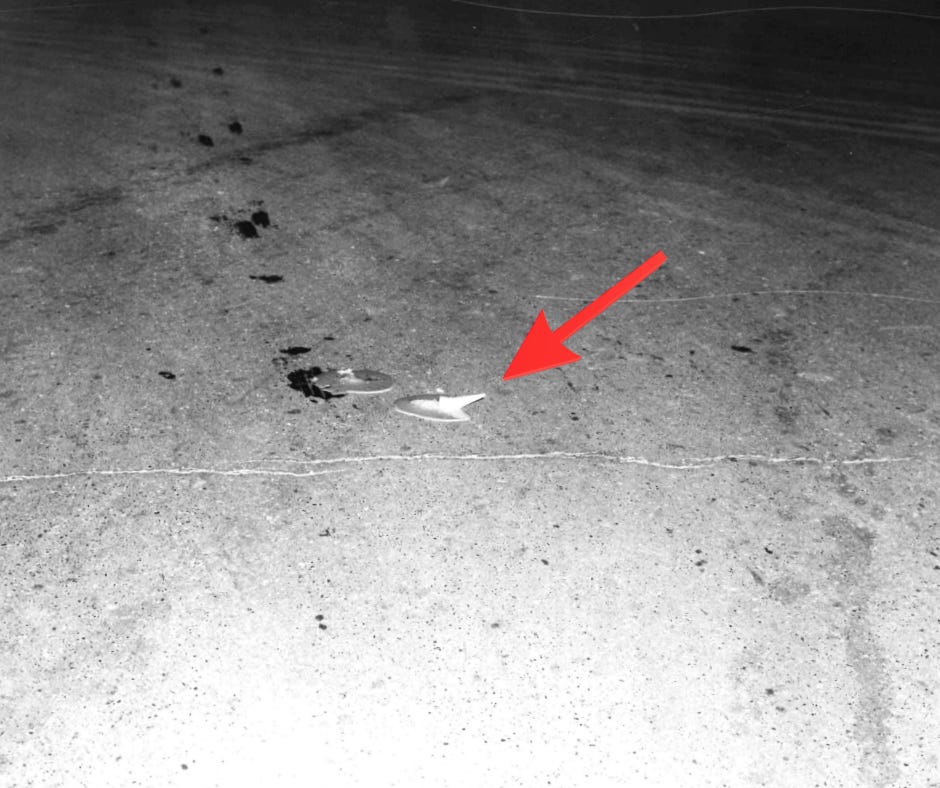
Darlene was among the first people questioned. She remembered investigators showing her different taillights from vehicles in an effort to identify the car involved. But despite dozens of interviews, police had no definitive suspect vehicle and no clear description of the driver.
Investigators checked local repair garages for cars with front-end damage. A local radio station even helped raise a $600 reward fund — a substantial amount at the time — in hopes that someone would come forward. No one did. Instead, rumors spread throughout Fulton. Two young men from prominent local families became the subjects of persistent community gossip, despite investigators finding no evidence linking either of them to the crash. The whispers endured for decades.
After several years, the reward fund—originally raised in hopes of generating information about Carolee’s killer—remained unclaimed. Rather than reclaim the money, the Ashby family asked that it be used to purchase speed RADAR equipment for local police, hoping that something positive might come from their loss and help prevent another family from enduring the same tragedy.
A Family Haunted by Loss
As years passed, the case went cold. But the Ashby family never stopped living with the tragedy. Halloween became a painful annual reminder of what had happened. The family eventually welcomed another son, Fred Ashby, and as he grew older, one of his close friends was a local boy named Michael Batstone. Years later, Batstone would become a police investigator. He remembered visiting the Ashby home as a teenager and noticing what appeared to be a memorial to Carolee displayed prominently in the living room. Even decades later, the family still hoped for answers.
The Case Reopens
In 1999, the case landed on the desk of then-Police Chief Mark Spawn and Lt. Russ Johnson of the Fulton Police Department.
Johnson reviewed the old files and found extensive investigative work from 1968: witness interviews, photographs, crash diagrams, and paint-chip evidence recovered from Carolee’s clothing. Still, the case lacked the one thing detectives desperately needed — a reliable lead.
The department held a press conference in 2000 and renewed public attention on the case, hoping someone might finally come forward. Again, nothing happened. The investigation stalled once more.
A Facebook Post Changes Everything
Then, in 2012, retired Lt. Russ Johnson tried something unexpected. Living out of state, he posted information about the case in a hometown Facebook group. Almost immediately, a woman contacted Carolee’s sister, Darlene.
The woman revealed that shortly after the crash in 1968, she had been asked to provide a Halloween night alibi for two brothers: Doug and Lenny Parkhurst. According to the witness, she refused and then she became frightened. Investigators reopened the case yet again. This time, Investigator Michael Batstone (Fred Ashby’s childhood friend) — and now a detective with the Fulton Police Department — took the lead.
A Buried Lead Resurfaces
Batstone interviewed the female witness, who described being asked to say she had been trick-or-treating with the Parkhurst brothers the night Carolee was killed. The information immediately stood out as credible.
Detectives then tracked down Lenny Parkhurst. To their surprise, Lenny vividly remembered the night of the crash — despite more than 40 years having passed. He described drinking with his brother Doug and being asleep in the back seat when they struck something. That interview prompted Batstone to revisit the original 1968 police reports. Buried inside the old file was a stunning detail. A patrol officer had interviewed Doug Parkhurst shortly after the crash and documented damage to the front driver’s side of his vehicle — damage the officer described as consistent with the shape of a small child’s head. At the time, Doug claimed the dent came from striking a concrete roadside marker. The explanation was accepted. But now, with fresh witness statements and Lenny’s recollections, the old report suddenly carried enormous weight.
The Discovery of the Car
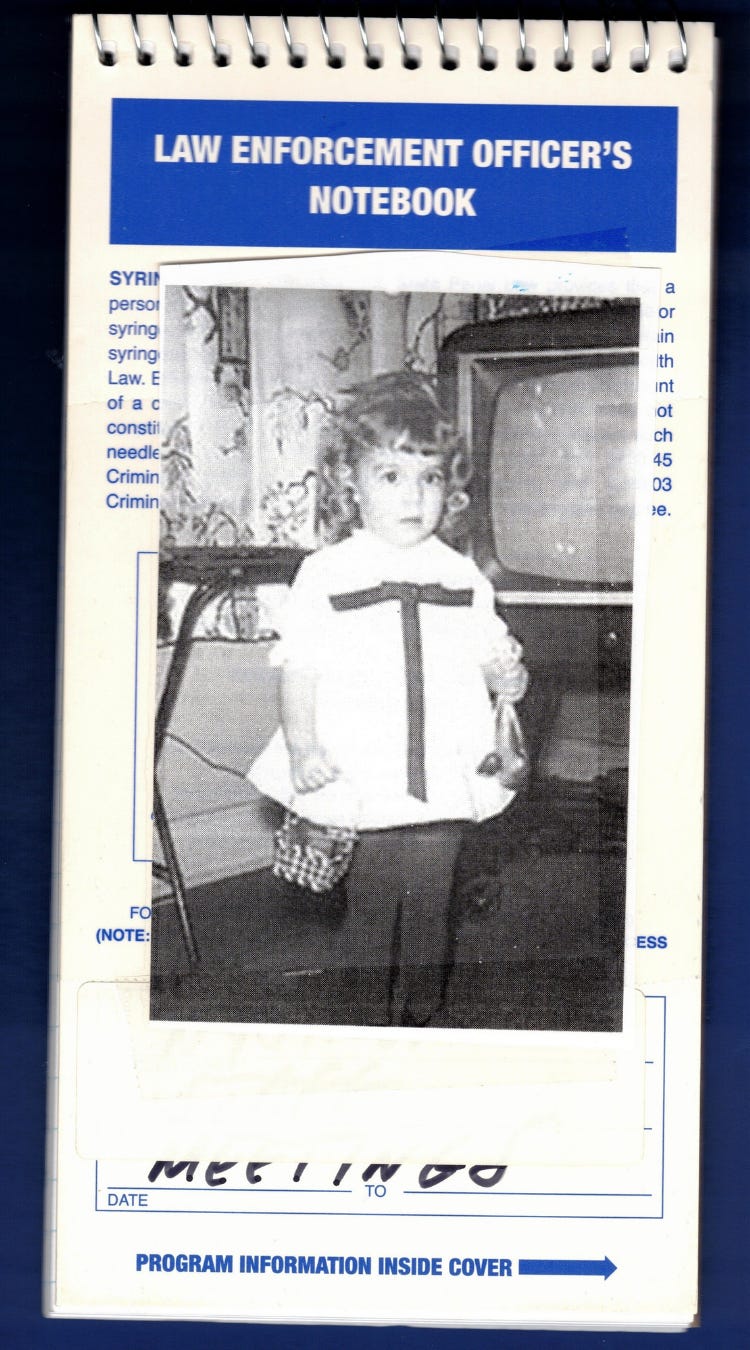
Investigators went to speak with Doug Parkhurst. At first, he claimed he remembered very little about the incident. But during the interview, Batstone indirectly showed him a photograph of Carolee that he had attached to the back of his notebook. When Doug saw the picture, he reportedly turned pale and became visibly distressed. Detectives believed guilt had haunted him for decades.
While Batstone interviewed Doug, other investigators followed another lead involving the car itself. They traveled to a relative’s rural property north of Fulton. There, hidden deep in overgrown woods, they were shown the car. It had been abandoned upside down since 1968. Investigators noted that, the car was located far off the road and covered with branches. So, unless you knew specifically where it was located, you were not going to find it.
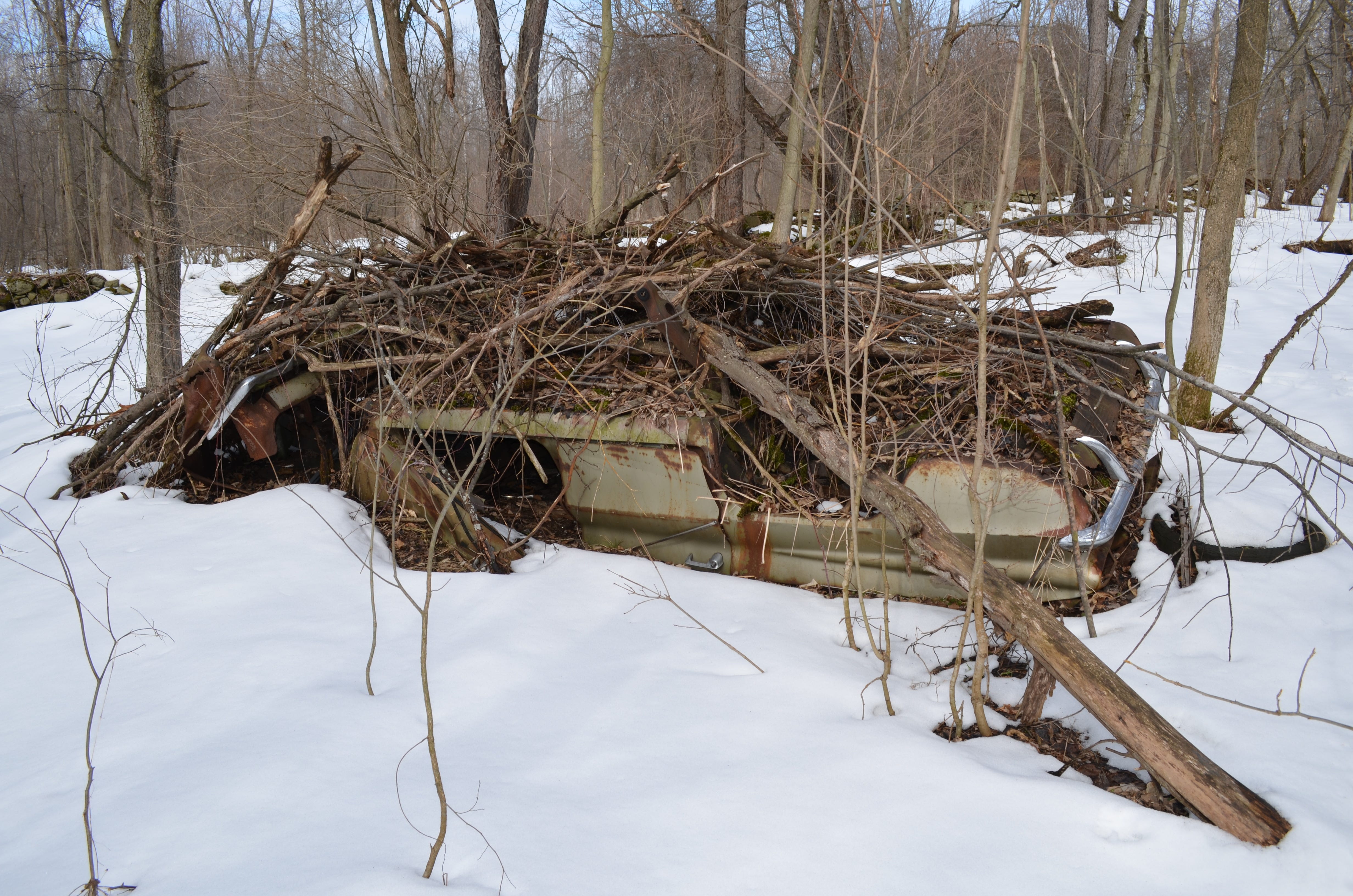
Investigators identified it as the same make, model, and color connected to Doug Parkhurst. Remarkably, the front fender contained a rounded dent matching the exact area documented in the original police report. Despite sitting exposed to the elements for 44 years, the vehicle became the single most important piece of physical evidence in the case. The witness later confirmed that the Parkhurst brothers had hidden the car there shortly after the crash.
Doug Parkhurst’s Confession
Police interviewed Doug Parkhurst multiple times. Because of the age of the case and limitations in New York law at the time of the offense, prosecutors determined there were effectively no criminal charges that could still be filed. Detectives were honest with Doug about that reality. Their goal became uncovering the truth and giving the Ashby family answers.
Eventually, Doug admitted he believed he had struck Carolee that night. Batstone later said Doug appeared consumed by guilt and trauma throughout his life.
Shortly after the crash, Doug joined the Air Force — something investigators believed may have been an attempt to escape the emotional burden he carried. As detectives escorted him from the police station after their final interview, Doug reportedly paused in the parking lot and quietly said: “I really hope someday that I could do something to make up for this.”
Years later, those words would take on a chilling significance.
A Strange Twist of Fate
In June 2018, Doug Parkhurst was living in Sanford, Maine when tragedy struck again. While attending his grandson’s baseball game, a woman identified as Carol Sharrow drove her vehicle onto the ballfield filled with children and spectators. Witnesses said Parkhurst stepped into harm’s way as chaos erupted. He was struck and killed.[1][2][3][4]
News reports later credited both Doug Parkhurst and coaches with helping to save lives that evening. To some, the moment felt like redemption. To others, it changed nothing about the pain left behind decades earlier.
The Rumors Finally Ended
One important consequence of solving the case was the clearing of two innocent men whose names had circulated in community gossip for decades. Investigators emphasized that the longstanding rumors had deeply affected those individuals and their families. After 44 years, the truth finally put those suspicions to rest.
“Closure” Never Really Came
For Carolee’s sister Darlene, learning the truth did not erase the pain. She later reflected that while the answers mattered, they could never restore what was lost.
She wondered what kind of aunt Carolee would have become… how she would have interacted with her nieces, nephews, and grandchildren. Those are the kinds of questions that never truly go away.
Carolee’s father died in 2010 without ever learning who killed his daughter. Her mother died in 2016 after finally receiving answers, but still carrying the heartbreak of losing her child.
A Case That Refused to Die
The investigation into Carolee Ashby’s death became the product of decades of persistence by detectives, reporters, witnesses, and family members who refused to let the little girl’s story fade into history.
Retired Lt. Russ Johnson said the case stayed with them long after he left law enforcement. “You always hear cops say there’s always that one that you still think about. This was the one,” said Johnson. He recalled that when the case was first reopened in 1999 he went to visit the family. He said they were appreciative, but were still plagued by the agony of her loss. “It was so painful for them still, all those years later, and we’re talking 1968... that many years later, they still had that hurt and pain, and that loss.”
And although no prosecution ever occurred, the truth finally emerged from the shadows after 44 years. For the Ashby family, that truth may never bring peace. But it did bring answers.
Click button below to listen to this episode. And check out our show notes including photos at www.apbcoldcase.com and listen on all major podcast platforms
©2026 The Spawn Group, LLC; All right reserved
Note: Local news reporter Carol Thompson is the author of the book, Who Killed Carolee? ISBN 9781492985334
[1] Sanford driver Sharrow has two OUI convictions; Sun-Journal, Lewiston, ME; 6/3/2018; p. A5; Accessed 12/6/2024
[2] Park; Sun-Journal; 6/3/2018; p. A5
[3] Girl’s Family; Journal Tribune; 6/5/2018, p. A6
[4] Man Killed when car drives onto ballfield; Fosters; 6/2/2018 https://www.fosters.com/story/news/2018/06/02/man-killed-when-car-drives-onto-ballfield-woman-charged/12018202007/
Photo: Courtesy of the Ashby family; used with permission.