

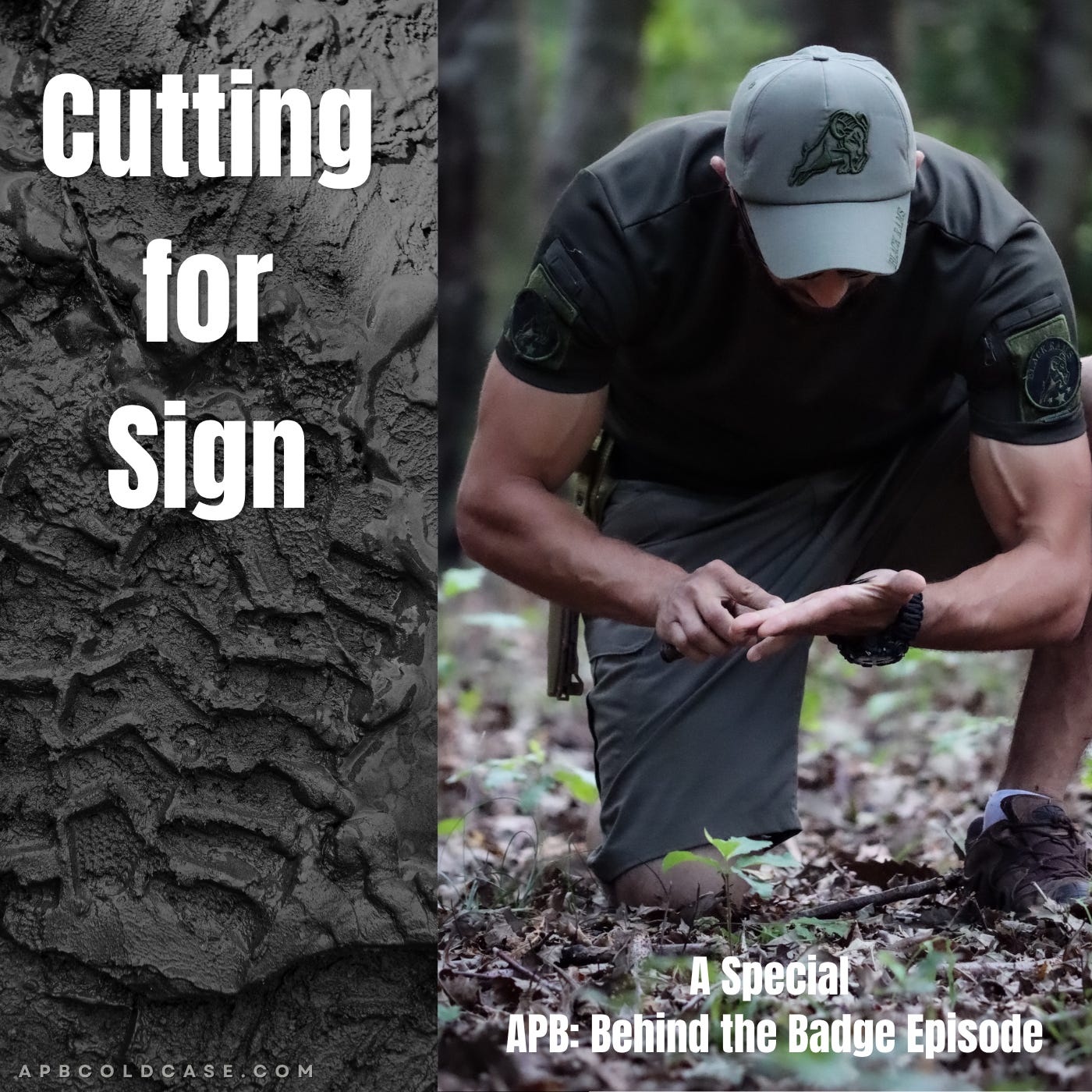
The smallest detail can mean the difference between finding someone and losing the trail forever. For retired San Bernardino County Sheriff’s Sergeant Darryl Heller, the ancient art of man-tracking became a powerful investigative tool—helping locate missing persons, pursue violent criminals, reconstruct crime scenes, and uncover evidence that might otherwise have gone unnoticed.
A broken twig. A footprint pressed into the earth. A tire impression left beside a roadway. To most people, these details might mean nothing. To a skilled tracker, they can tell a story.
Where did someone go? How many people were there? What happened along the way? Did they walk together or separately? Did they stop, run, fight, or change direction? And perhaps most importantly, where will the evidence lead next? These are the questions that define the ancient practice of man-tracking, an investigative discipline that remains relevant even in an age of sophisticated forensic technology.
For retired Sgt. Darryl Heller, formerly of the San Bernardino County Sheriff’s Office in California, tracking is far more than following footprints. It is a way to reconstruct events, identify suspects, and connect people to crimes through the physical evidence they leave behind.
In this special APB: Behind the Badge episode, Heller shares the techniques, experiences, and remarkable cases that demonstrate just how much a trained investigator can learn by reading the ground. One of his most compelling cases began with a brutal murder in the California desert.
A Murder on Aspen Drive
Shortly before midnight on May 20, 1998, 24-year-old Mary Schultz was at home on Aspen Drive in Twentynine Palms, California. Her six-year-old daughter and five-week-old son were also in the house, along with two adult men, one of whom was named Danny. Suddenly, five men burst through the front door. Their apparent intention was to kill the people inside.
One of the intruders, later identified as the ringleader, attacked Mary with a knife. Her young daughter, sleeping only a few feet away, awoke to the sound of her mother’s screams. Mary was stabbed repeatedly, suffering devastating injuries to her neck and numerous defensive wounds.
Danny attempted to retrieve a .22-caliber rifle, but because there were small children in the house, the bolt had been removed. Unable to make the weapon operational, he dropped it and ran. “He ran right past the suspects, runs out the front door, off into the darkness….”, said Sgt. Heller, with all five attackers chasing him.
Another man who had been inside the house managed to hide beneath a pile of dirty clothes under a pool table in the garage. He remained undetected. Danny escaped and eventually made his way to police headquarters, where he provided investigators with information about the attack and the people he believed could be responsible. Mary was dead. Her children had survived unharmed.
The investigation into her murder was underway, and Sgt. Heller was called in to examine the physical evidence. His assignment would take him well beyond the walls of the house.
Reading the Crime Scene
Heller’s approach to tracking begins with a systematic examination of the entire property. Rather than focusing exclusively on the immediate crime scene, he establishes a perimeter and looks for incoming and outgoing tracks that do not belong to the people who live there. That means examining the footwear of residents and accounting for the shoes worn by responding officers, firefighters, and anyone else who entered the scene. Only then can investigators begin separating familiar impressions from unknown ones.
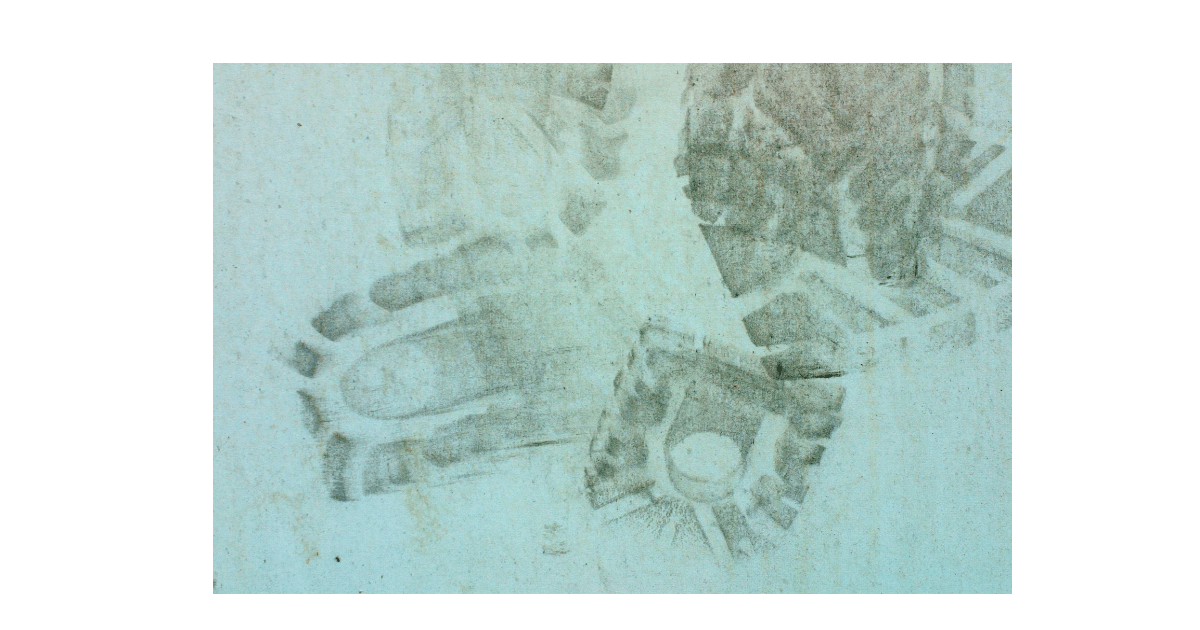
As Heller explained, the objective is to determine how many unidentified tracks are present and how those tracks move through the area. The examination doesn’t stop outdoors. Footwear impressions can sometimes be found on surfaces where the naked eye reveals nothing. A person might climb through a window, step into a bathtub, walk across a tile floor, or enter a kitchen by stepping on a counter or into a sink. Heller explained that investigators can use a flashlight and an oblique lighting angle—directing light across a surface rather than straight down—to reveal subtle impressions that would otherwise remain difficult to see. In some circumstances, those impressions provide especially useful measurements. A footprint pressed into soil may spread or distort depending on the ground. An impression left on a hard, flat surface can preserve more precise details of the footwear’s shape and dimensions. Said Heller, “It’s almost like stepping in black ink and then making a shoe print on an extremely hard, flat surface. You will get shoe measurements that are actually so precise and accurate versus outside.”
The principle is straightforward: Before investigators can interpret the evidence, they must find it, preserve it, and document it correctly. At the Schultz murder scene, that process would reveal details about the suspects’ movements before, during, and after the attack.
The Footprints Beneath the Van
The front yard contained numerous footprints, complicating the task of separating the suspects’ impressions from those left by others. Then there was an unexpected development. Mary’s father arrived in a van and drove into the area where the suspects had chased Danny from the house.
Ordinarily, a vehicle entering a crime scene can destroy valuable evidence. In this case, however, the van inadvertently protected some of the impressions. Several of the shoe tracks were located beneath it, shielded from the activity of nine firefighters and the responding deputy. Once the van was carefully moved, Heller and the investigators were able to document three particularly clear shoe impressions. The discovery gave the investigation a valuable starting point. But Heller’s work was only beginning.
Following the Trail Beyond the House
One of the most important aspects of Heller’s investigation was his decision to follow the evidence away from the house. The suspects had parked their vehicle approximately a block and a half away, then walked roughly 500 yards across a field toward the residence. By examining the tire impressions left near the roadway, Heller was able to establish measurements that could help identify the vehicle. The impressions provided information about the distance between the tires, measured from center to center, as well as the vehicle’s wheelbase. The way the tracks were formed also helped him determine that the vehicle had four doors.
The shoe impressions revealed even more. Heller began distinguishing the five sets of footwear, assigning numbers to the individual tracks. By examining the impressions and their sequence, he reconstructed how the suspects moved between the vehicle, the field, and the house.
He could determine which suspect appeared to have exited the vehicle first and how the order changed when the men returned. The individual initially identified as the driver appeared to have become a passenger, while another suspect took over the driver’s position. These were not simply five sets of footprints leading in the same direction. They were five separate trails that could be compared, connected, and interpreted. The tracks showed that the men had staged in a field across the street from the house before approaching it. They also led Heller to the location where the suspects had gathered and waited. There, investigators discovered an empty cigarette pack, a Coke can, an empty whiskey bottle, and extinguished cigarettes scattered on the ground. Those items potentially offered another avenue for forensic examination, including DNA analysis. Without tracking, investigators might never have found them.
The evidence also helped establish a sequence of events: The suspects had arrived, gathered across the street, and then crossed over to enter the house. After the attack, they chased Danny through a neighboring yard and into the field. The darkness allowed Danny to escape. The five men eventually circled back toward the roadway and returned to their vehicle. Heller followed their tracks as they converged again near the place where they had parked. By examining where the impressions overlapped, he could connect the individual tracks and establish that all five suspects had traveled together through the relevant areas.
As he explained, this work takes time. Investigators must compare the impressions carefully, determining which tracks overlap and in what order. One suspect’s footwear may cross another’s, while a third set may cover part of an earlier impression. The result is a chronology built from physical evidence.
In the Schultz case, Heller was able to link all five suspects to the movements between the vehicle, the field where they congregated, and the area where they pursued Danny. It was a critical investigative finding.
In serious criminal cases, suspects sometimes deny being present or attempt to minimize their involvement. A carefully documented sequence of tracks can help investigators test those claims against the physical evidence. Heller had established a detailed account of where the five men had been and how they moved through the scene. Now he needed to identify the vehicle and connect the evidence to the individuals responsible.
The Clue Hidden in the Tires
Heller had another important piece of evidence to consider: the vehicle’s tire impressions. He refers to mismatched tires as bastard tires.
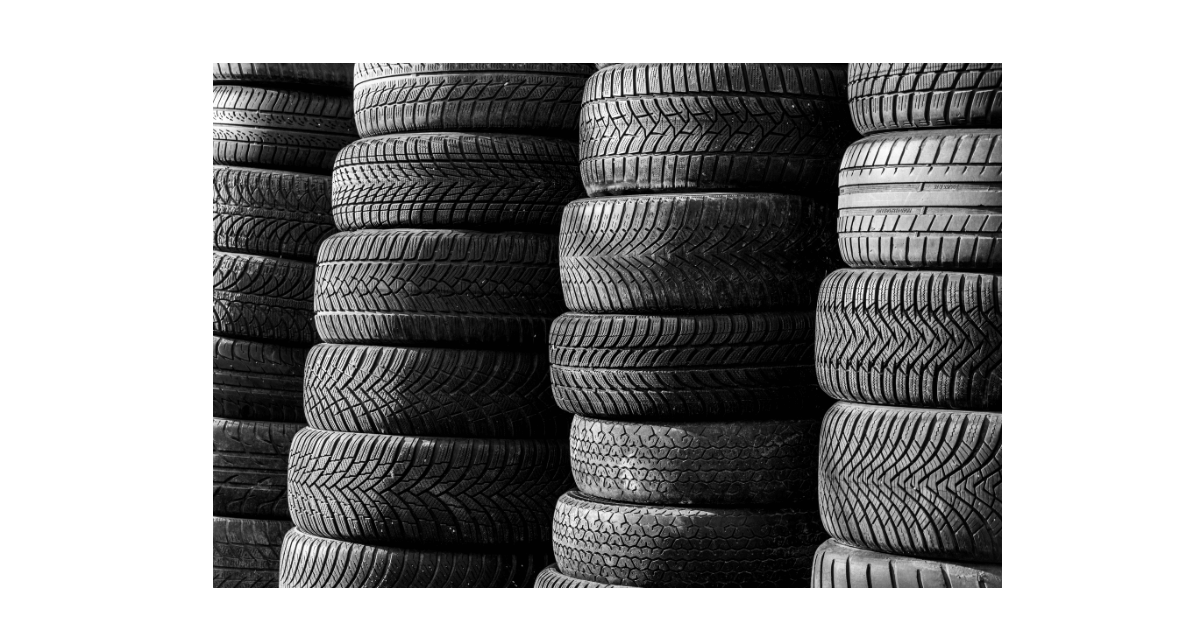
The term describes a vehicle equipped with different tires rather than a matching set. Differences in brand, model, tread design, and tire width can produce a combination of characteristics that helps distinguish one vehicle from another. The number of possible combinations can be enormous. Heller compared the process to playing the California lottery, emphasizing the challenge of matching multiple characteristics among the many possible tire combinations. In the Schultz investigation, he had documented the impressions carefully enough to recognize the relevant characteristics.
Later that day, investigators contacted him about a vehicle at a house approximately 20 miles east of Twentynine Palms. Heller arrived and looked at the vehicle. He didn’t need to take out his measuring tape. “That’s the car, those are the tires!”, recalled Heller. The vehicle and its tires matched what he had observed at the crime scene.
The tracks had helped lead investigators to the car, and Heller’s examination of the tire characteristics confirmed what he had suspected. All five suspects were identified.
Israel Vasquez was established as the ringleader and the man responsible for Mary’s murder. Thomas Weatherwax was another principal suspect.
Contemporary newspaper accounts described the severity of Mary’s injuries. Reporting also indicated that she had been targeted because she witnessed a crime. During trial testimony, one of the attackers said he had accompanied Vasquez to the house to collect a drug debt. Whatever the precise motive, the investigation had developed evidence linking the suspects to the crime. Heller’s work helped establish the physical story of what happened before the attack, during the pursuit, and afterward.
Explaining the Science to a Jury
Finding evidence is one challenge. Explaining its significance in court is another. For tracking evidence to be useful at trial, an investigator must be able to show a judge and jury how the conclusions were reached.
Heller described how he walks jurors through the process of comparing overlapping footprints, establishing sequences, and connecting individual tracks. He then explains the tire measurements and the significance of distinctive tire combinations. The goal is to make the process understandable rather than simply asking jurors to accept an expert’s conclusion.
Heller watches the jury as he explains the evidence. When he sees jurors nodding in acknowledgment, he knows they are following the reasoning and he can move on to the next part of the investigation.
During the Schultz murder trial, something happened that stayed with him. As the jury prepared to deliberate, they sent a note to the judge asking whether Heller would remain available after the jurors discussed the case. They wanted to talk with him about tracking because they had found his testimony so interesting. For Heller, it was an unforgettable compliment. His testimony had done more than explain the evidence. It had introduced the jury to an investigative discipline that many people had never encountered.
Israel Vasquez was found guilty of Mary’s murder and initially sentenced to death. Following a retrial approximately a decade later, he was again convicted and sentenced to life without parole. The case demonstrated how carefully documented tracking evidence could contribute to a complex criminal investigation—and how important it was for an investigator to explain that evidence clearly.
A Trail That Stretched 22 Miles
The Schultz case was not the only investigation in which Heller followed physical evidence over considerable distances. In another drug-related shooting, two suspects walked from a parked vehicle toward a nearby residence while their getaway driver remained behind.
The two men paused, smoked cigarettes, and dropped a beer can before approaching the house. Their intended victim was talking with someone inside when one of the suspects fired a pistol through a glass window. The victim turned his head at the moment the gun was fired. The bullet struck his upper teeth, causing devastating injuries. His friends needed to get him to a hospital quickly. “The victim was thrown into the seat of a vehicle. They drove out a half-mile dirt driveway to the paved road,” said Heller. When the getaway driver saw headlights coming down the driveway, he fled, leaving the two suspects behind. The men returned to the place where they expected the vehicle to be waiting. It was gone. That left them on foot, with no ride and a significant distance to cover.
Heller began tracking their movements. He followed their footwear along paved roads and across areas of open ground. The trail sometimes veered away from the roadway, taking him through unfamiliar properties and challenging terrain. At one point, the suspects’ route led through a yard where they were confronted by a large German Shepherd. Heller encountered the same dog while following the trail. The tracking continued throughout the night. Eventually, the evidence led him to a house where the suspects appeared to have taken refuge.
It was approximately 7:30 - 8:00 the following morning when Heller approached the location. A vehicle pulled away, and another deputy stopped it. Investigators found the weapon hidden behind the vehicle’s glove compartment. A subsequent search of the house uncovered the footwear and other evidence needed to strengthen the case. But Heller had noticed something else along the way.
Were They Fighting—or Dancing?
Approximately halfway through the long track, the footwear impressions suggested that the two suspects had been involved in a physical altercation. The ground showed deep digging by their shoes, signs of falling, knee impressions, and handprints. The pattern appeared consistent with a struggle between the two men.
Heller also observed that the suspects had emptied spent shell casings from the gun. One of those casings was found approximately eight miles farther along the route. The evidence helped investigators reconstruct what had happened after the shooting and while the suspects were trying to escape.
As with the Schultz case, Heller eventually had to explain his interpretation in court. He recalled that a defense attorney questioned how he could know the two men had fought. Heller had a ready response. He explained that, based on the physical evidence, there was only one other possible interpretation…. “They could have been dancing together.” The jury smiled.
It was a moment of humor, but it also illustrated a serious point about tracking: The investigator must explain how the physical evidence supports a conclusion while recognizing what the evidence can—and cannot—establish. A set of impressions does not speak for itself. The investigator must interpret it carefully, document the observations, and explain the reasoning behind the conclusions. In this case, the trail stretched approximately 22 miles and ultimately helped investigators locate evidence that connected the suspects to the shooting.
When Footprints Tell Time
Tracking can reveal more than a person’s direction of travel. Under the right circumstances, it can also help investigators establish a timeline.
Heller described an armed robbery at a Circle K convenience store in the western part of Yucca Valley, California. The suspect had used an alley to approach the store and then walked back through the same area after the robbery. Nearby businesses included a bar that stayed open late.
When Heller checked the alley he found tire impressions from an employee’s vehicle that had backed over the suspect’s shoe impressions. The timing was significant. The robbery occurred during the early morning hours. The bar closed at 2 A.M. and an employee left at approximately 2:30 A.M. Because the employee’s vehicle had driven over the suspect’s footprints, the tracks established that the suspect had passed through the alley before the vehicle left. That placed the suspect’s movements within a narrower timeframe.
Heller and other deputies followed the trail to a house. When Heller knocked on the door, the man who answered acknowledged that he had been to the Circle K but he claimed that he had walked through the alley and climbed a fence the previous day. Heller already had physical evidence indicating that the footprints had been made before the employee’s vehicle passed over them that morning. The man’s explanation did not fit the timeline.
As Heller described it, investigators were able to narrow the relevant period to between approximately 1:45 and 2:30 A.M. The man was arrested and police collected his footwear.
The case illustrates an important principle: Physical evidence can provide an independent way to evaluate a suspect’s account of events. A person may offer an explanation, but the investigator can compare that explanation with the sequence preserved in the ground.
The Search for Laura Ann Bradbury
Not every tracking operation ends with an arrest or a solved crime. In October 1984, three-year-old Laura Ann Bradbury disappeared during a family camping trip in Joshua Tree National Park.
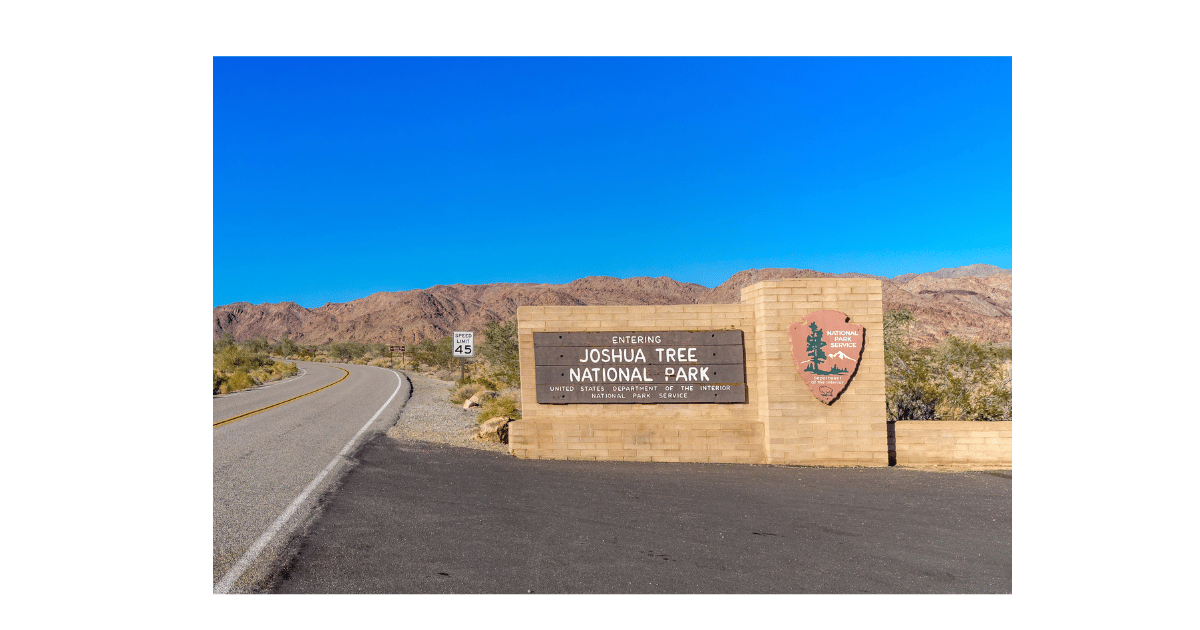
Laura had last been seen following her brother toward an outhouse about 50 yards from the family’s campsite. Heller participated in the search, which continued for four to five days and involved search-and-rescue personnel and volunteers from throughout the region. Despite the extensive effort, Laura was not found during that search.
A couple of years later, part of a skull was discovered approximately two miles from where she had disappeared. DNA testing subsequently confirmed that the remains belonged to Laura.
Searchers returned to the area and located a small piece of cloth believed to be part of Laura’s clothing. Heller recalled the extraordinary lengths investigators went to in their effort to find additional evidence. Searchers collected animal droppings from coyotes, bobcats and mountain lions, looking for traces of clothing that might have passed through the digestive systems of animals that had scavenged in the area. It was painstaking work, conducted in the hope that even a tiny fragment might help explain what had happened to the missing child.
Sadly, the cause and manner of Laura’s death remain undetermined, and the circumstances of her disappearance have not been resolved. Her case stands as a reminder that tracking is not simply about following a trail to its conclusion. Sometimes, it is about continuing to search for answers when the evidence is limited and the terrain is unforgiving.
Tracking in the City
Many people associate tracking with remote wilderness, desert landscapes, or open fields. Heller’s experience demonstrates that the technique can also be valuable in densely populated areas, where the evidence may be significantly more difficult to follow.
In one case, he was asked to help locate a man suspected of sexually assaulting two young girls. Investigators had learned that the man had built racks in a garage where the children had been restrained and assaulted. When police learned of the location, the suspect fled on foot, and the tracking operation began.
Following footwear impressions through business districts and residential neighborhoods required a different level of concentration. Pavement, driveways, sidewalks, and the constant movement of people and vehicles can complicate the process.
Heller described urban tracking as detailed, intricate work—challenging, but something he had done hundreds of times.
The trail eventually led to a house. Other deputies and detectives approached the front door while Heller covered the rear of the residence. He was positioned near the back of the house when events took a tragic turn. The suspect knew he was caught. Sgt Heller said they heard a loud boom. The man had stood in the shower and blew his head off with a shotgun.
The incident was a stark reminder that tracking can bring investigators face-to-face with dangerous and unpredictable situations. It also demonstrated that the ability to follow a trail is not limited to open terrain. The same discipline of observation can be applied in neighborhoods and commercial areas, provided investigators understand how to interpret the signs they encounter.
The Lesson in the Missing ATV
Heller also used his experience to teach fellow deputies how to improve their own tracking techniques. He recalled one occasion when colleagues enthusiastically told him about a case involving a stolen all-terrain vehicle. They had followed the ATV’s tire tracks for six or seven miles. There was just one problem… they had not caught the suspect.
Heller asked whether they had followed the incoming footwear impressions. The question revealed a potential missed opportunity. The ATV might have been stolen by someone who lived nearby; or the suspect could have approached on foot from a neighboring property, a block or two away, or perhaps some distance from the location where the vehicle was taken.
By examining both incoming and outgoing tracks, investigators could have pursued two possible routes to the suspect’s location. The tire impressions might lead away from the scene, while the footwear impressions could reveal where the thief had come from. The two trails might ultimately converge at a waiting vehicle or the suspect’s residence.
For Heller, this was an essential lesson: A tracker must consider all the evidence, not just the most obvious trail. His colleagues may have remembered the long distance they followed the stolen ATV. The more important lesson was to look back toward the crime scene and to explore what the incoming tracks could reveal.
From Search and Rescue to Law Enforcement
Heller’s tracking skills developed from an interest that began before his law enforcement career. His first passion was tracking in support of search-and-rescue operations.
A friend invited him to watch a physical agility test for the San Bernardino County Sheriff’s Department. Heller decided to take the test himself. He was accepted into the department but his friend was not.
Once Heller became a deputy and began working in the field, he found that tracking was useful far beyond missing-person searches. “I started finding that I was using tracking almost every day, 5 days a week. It didn’t matter if it was just a small call of a prowler at night. There were shoe tracks if it was a vandalism, somebody knocking over somebody’s mailbox or stealing their mail...” said Heller. He began requesting burglary cases and looking for opportunities to use his skills. The more he worked, the more he learned.
He understood that tracking was not a single technique that could be mastered overnight. It required patience, practice, observation, and a willingness to study the evidence rather than make assumptions. Each case presented new challenges. Each trail offered an opportunity to learn. Over time, tracking became one of the defining features of his law enforcement career.
Cutting for Sign: A Technique With a Long History
The expression cutting for sign refers to the practice of searching for physical indications that a person, animal, or object has passed through an area. Those signs may include footprints, tire impressions, disturbed vegetation, or other changes to the environment. The technique requires a tracker to recognize details that others might overlook and then determine what those details reveal about movement and activity.
The same principle appeared in another case featured by APB: Cold Case - the murder of Marina Ramos, whose body was discovered in the Arizona desert in 1989. The original investigators examined footwear and tire impressions at the scene, using tracking observations to develop information about potential suspects. Investigator Lori Miller, who later worked on the case, explained that tracking had been one of the principal methods used by the original investigators to develop suspect information.
Their notes included estimates of the suspects’ heights, stride lengths, and possible footwear. One set of impressions was attributed to a person estimated to be between 5 feet 10 inches and 6 feet 2 inches tall, with a stride length of approximately 29 inches and footwear identified as Nike. A second set suggested a person between 5 feet 4 inches and 5 feet 8 inches tall, with a stride length of approximately 28 inches. The shoe brand was unknown. The observations also included information about a possible suspect vehicle.
The murder of Marina Ramos remained unsolved for decades. However, a major development eventually brought new answers to her family: Her two infant daughters, who had disappeared around the time of her death, were located alive.
Their extraordinary story is explored in the APB: Cold Case episode Murder in the Mohave.
The case demonstrates how observations made at a crime scene can become part of an investigation’s long-term record, preserving details that may be revisited years later. Even when a case remains unsolved, careful documentation can provide a foundation for future investigative work.
A Legacy That Continues
Sgt. Darryl Heller has since retired from the San Bernardino County Sheriff’s Office, but his influence extends beyond the cases he personally worked. During his career, he received recognition from search-and-rescue organizations and was recognized by the governor for his work in locating 88 lost persons.
Perhaps his most enduring contribution has been sharing his knowledge with other law enforcement professionals. Heller developed a certified tracking course for law enforcement, helping officers learn the methods and principles that made him such an effective investigator. The training reflects a central lesson from his career: Tracking is not simply a matter of following footprints until they disappear. It requires a disciplined approach to observation, careful documentation, and an understanding of how individual pieces of evidence fit together.
A footprint may reveal the characteristics of a shoe. Overlapping impressions may help establish the order of events. Tire tracks may point investigators toward a particular vehicle. A trail through a field may lead to evidence discarded far from the original crime scene. And when these observations are combined with traditional investigative work, they can help establish a chronology, test witness statements, identify suspects, and reconstruct what happened.
In the murder of Mary Schultz, tracking helped investigators move beyond the house where she died and discover evidence that connected five suspects to the events surrounding the attack. In other cases, Heller’s skills helped investigators follow suspects across miles of difficult terrain, establish timelines, and locate evidence that strengthened criminal investigations. In the search for missing persons, the same principles could help searchers understand where someone had traveled and where the next search effort should be concentrated.
For Heller, the ground was never simply ground. It was a record of human activity—one that could be read by someone trained to recognize its details. Technology continues to expand the tools available to modern investigators. But Heller’s career demonstrates why traditional investigative skills still matter.
Sometimes, the most important evidence isn’t found in a laboratory or on a computer screen. Sometimes, it is waiting in the dirt, beneath a vehicle, along a roadside, or in a field where five men once gathered before committing a terrible crime. Someone simply has to know how to find it.
Listen to Cutting for Sign, a special APB: Behind the Badge episode featuring retired Sgt. Darryl Heller, and discover how the ancient art of man-tracking helped investigators find the missing, follow violent offenders, and uncover evidence that might otherwise have gone unnoticed.
For more true-crime stories, investigative insights, and updates on unsolved cases, visit APBColdCase.com.

©2026 The Spawn Group, LLC; All right reserved